Cultural Matrix and Artistic Creation: From the Classical Practice of One's Art to Transdisciplinarity
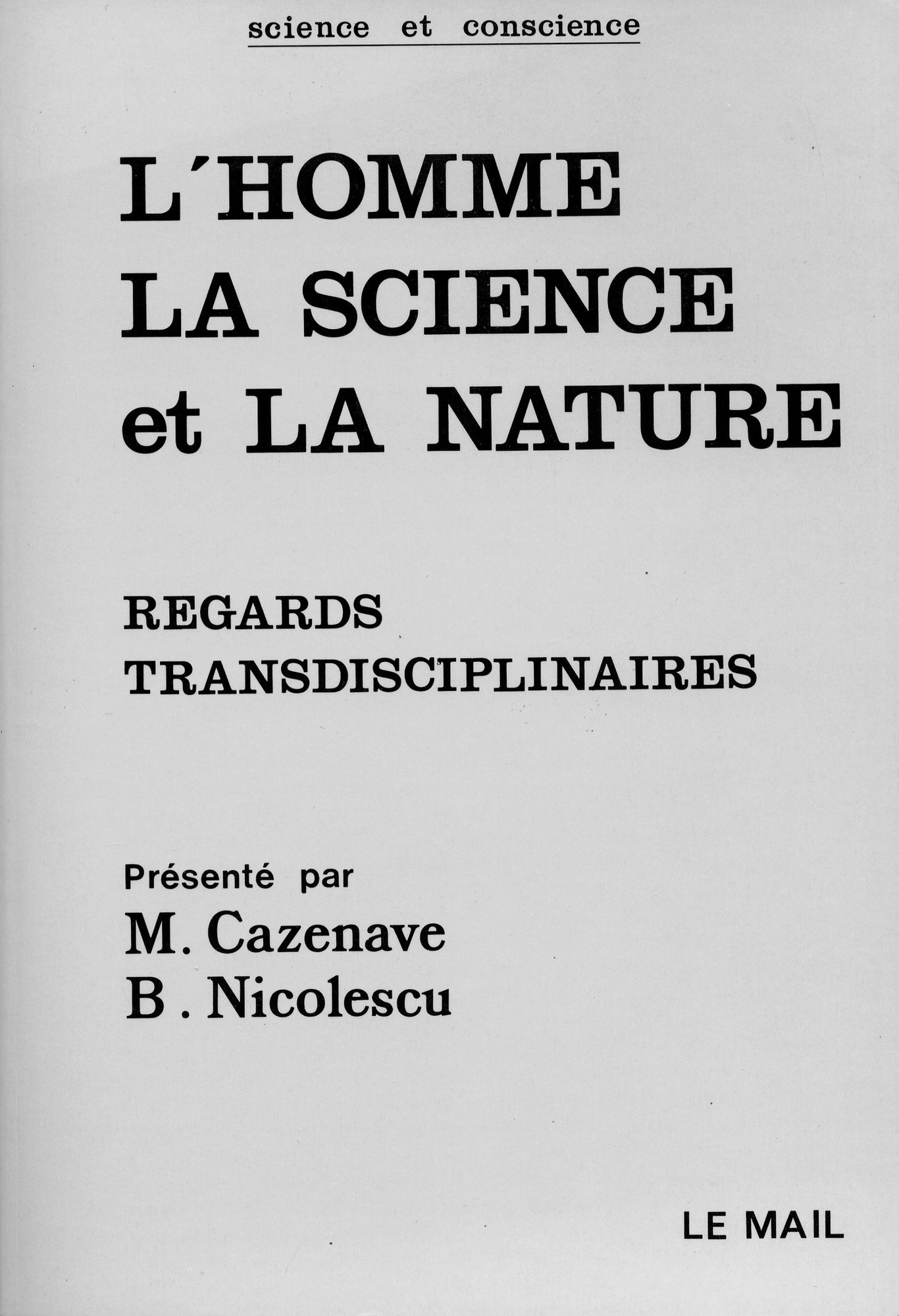
in Michel Cazenave and Basarab Nicolescu (eds), L'Homme, la science et la nature : regards transdisciplinaires, Aix-en-Provence, Le Mail, “Science et conscience” series, 1994, pp. 232-264.
See: Shape-memory alloys, Space art, The Great Celestial Wheel, Hermaphrodite, Messages from Humankind to the Universe, The Totem of the Future
p. 232
Jean-Marc Philippe (France), professor at the Centre européen de techno-culture (CETECH), Université Paris-Dauphine.
Introduction
In the pages that follow, the reader will first find a description of the cultural matrix specific to today’s wealthy technocultural societies. The question of the economics of artistic creation will be addressed there. After this first look at the “state of play”, an account will be given of one artist’s questioning of how well his function as an artist matched the conditions of production of his art as they were offered to him within this matrix and its tradition. It will then be shown how artistic concepts born of transdisciplinarity could modify the nature of artistic invention and push the definitions of the “work of art” further afield. Four examples of concepts will be described, more particularly the “Royalties/Jardin/Terre [Royalties/Jardin/Terre]” concept, a concept capable of enabling the artist to intervene once again in his City — not that he wishes to do so at all costs, but because he feels it necessary to restore certain balances flouted by the fantastic efficiency of science and technology, in full exponential hypertrophy, when no counterweight arising from artistic sensibility came to restore the balance.
p. 233
Artistic creation inseparable from its cultural matrix — a first look at this matrix
It is hardly possible to separate the form taken by artistic creation from the cultural matrix that bears it. Rightly so, for this matrix can indeed be regarded as the nourishing and initiating soil which determines the seeds of all creation, and which also contains the active ferments that will allow a nascent, embryonic artistic concept to find — or not to find — the means, in every sense of the term, of its realisation.
If, then, we were to identify the particular features of the age — as regards modern, wealthy industrial societies such as ours — we would see that their very specificity derives directly from the exponential accumulation of Knowledge of scientific origin, first of all, and from the exponential acceleration of technological Know-How, on the other hand.
Indeed, combined with a society of market economics and unbridled free competition, these two factors prove particularly prolific in their effect on invention in the broad sense, and on the processes of developing, duplicating and marketing services or products — varied, novel, high-performing, arresting… products and services that seduce and trigger intense desires for possession in a teeming effervescence of consumption, judging by the world trade figures relating to them.
From this state of affairs results a speed of evolution and transformation of our cultural, gestural and physical environment without equivalent, such as no human society in any era had ever, until now, encountered or brought about.
If the particularly rapid pace of the evolution of our environment entails a certain number of consequences, the nature of this evolution entails p. 234 many others still, whose effects are radically deeper and more insidious:
— From the pace of this evolution follows, for example, the need for each of us to find the means to adapt and to maintain “contact” with this cultural matrix through rapid accommodation to its innovations and its changes (conceptual and formal), on pain of losing the elements of shared language or practice that allow each person to maintain the capacity for dialogue with his contemporaries.
— On the nature of the evolution of this environment, and more significantly still, depends in particular the shift in the representation that we can and will have to form of the “world”, of this world around us, this world of unique profusion in which we live and with which we might not merely co-exist or come to terms, but in which we might try to flourish.
Moreover — and this is another first in the individual history of humankind — this fundamental and essential representation, conscious or unconscious, will have to be personally readjusted, several times, throughout each person’s existence. This is so insofar as such a representation stems from the appearance in our immediate environment of new elements of knowledge, revealing experiences and new daily behaviours, insidiously or explicitly introduced into our everyday space and our habitual gestures within our very cultural matrix.
Indeed, for less than a century now, we have observed that the periodicity with which “significant” information appears has become shorter than the span of a human generation. For example, one may note that a certain number of elements of information and phenomena of the first importance no longer appear at the rate of ONE Galileo or ONE Newton per century, but that, quite the contrary, the appearance/collision of extraordinary “fundamental” facts now occurs every fifty, twenty or ten years, in an ever faster dynamic: 50 years ago the nuclear bomb taught us that Humanity p. 235 as a whole was henceforth mortal and that it could be so at the hand of Man; for 40 years colour images have been travelling across the surface of the globe at the speed of light, in real time; thirty years ago the first photographs of our planet taken from space were brought back to us *; for 10 years telematics, the fax and the circulation of money at the speed of light have been part of our practices and have entered our everyday doings. Today genetic manipulations are many, and questions of ethics and morality intersect, etc.
Furthermore, the consequences of this double exponential acceleration, scientific and technological, are drawing us — and no longer just us, the wealthy industrial societies, but the world in its entirety — towards economic and social situations that are by their very nature unpredictable and therefore unmanageable, even over short spans of time: who could have foreseen the OPEC crisis, the radical transformation of the Soviet bloc, the AIDS pandemic? And what will those people do who, over there and elsewhere, live in poverty and continue to watch on their television screens such disparities of wealth within one and the same world? And how is one still to manage the fact that today the dazzle of our profuse shop windows and of our technological achievements beckons the countries of the Third World, which, taking us as their model, wish to “catch up” with us, seeing in this ultimate goal their only model for the future?
Still with regard to our cultural matrix, we must not bury our heads in the sand either, and must also note that this double acceleration is drawing us towards forms of action, and therefore of responsibility, before which our faculties of reflecting, thinking and deciding are today proving
Note: This first photograph of the Earth brought back from space (and its later variations) may today be regarded as the most significant and most compelling work of art produced by our century. A work, it should be noted, produced not by artists but by men of science, an unavoidable work through which our representation of ourselves will never again be what it was “before”, a work perceived, apprehended and known today by more than half of humanity…
p. 236
ineffective and ill-adapted, at a time when we needed them more than ever.
In this respect, ethics committees have sprung up beyond counting in the most varied fields, clearly reflecting the ability of certain leading professionals to pose genuine questions at their foundations, but reflecting too the fact that, at the second stage, we are completely overwhelmed by the very handling of these questions — clear evidence that we do not (or no longer) possess the appropriate arsenal of philosophical, religious, artistic or poetic reflection that we might have hoped to develop in order to try to provide one answer, “the” answer, or several.
Such a double exponential acceleration (scientific and technological) need not have been worrying in itself, had the other sectors of human thought been equally favoured and called upon to act as a counterweight to the characteristic technocultural hypertrophy we know today. For some time now, the most welcoming structures in our societies have naturally been those from which one can — in our decidedly mercantile society — anticipate the greatest profits. And these fields are indeed those involving science and technology, since they are, let us recall here, the sectors promised the best expectation of profit, the very sinews of war in our conquering modern societies.
If we allow ourselves to dream, the real challenge of our contemporary society will perhaps be met on the day when poetry, philosophy, the art of thought and of reflection, the fine arts and — why not — perhaps religion too, are able to generate and yield, if not profits comparable to those deriving from the application of science and technology in our mercantile societies, then at least to intervene and respond to the particularly pressing calls, requests and expectations of individuals, and in parallel to nourish minds in return.
For the absence of such complementary places of profit p. 237 conducive and favourable to the production of reflection, art and philosophy may indeed explain the bankruptcy of thought that we observe in our societies so full of demand. A bankruptcy of thought whose immediate and primary consequence lies in the profound inability of our contemporaries any longer to reach a synthesis of the world in which they live and through which they also exist, and their inability, too, to form a coherent, forward-looking and responsible representation of it — even when they are, for example, a political leader or an economic decision-maker within it.
The hypothesis and the concern that arise at this level — with a view to forward-looking visions — would be to consider the various human societies as the outcome of a series of collective behaviours — around which the members of the said society cluster and polarise in their daily efforts — and then to examine whether, within such a precise framework, such consensual societies might not have an effectively limited and finite trajectory/destiny, passing through an expansion whose culmination point would mark the apogee — rather as a mathematical equation contains a maximum — from which point decline would set in, ineluctably, as an inescapable corollary. One need only think of the disappearance of ancient Egypt, of the Greek and Roman civilisations and, closer to us, of the collapse of the former USSR.
In this frame of mind, one may then ask whether our technocultural societies will reach this culmination point — the true point of no return sealing their irreversible decline — all the more quickly if the relevance of sensitive and intuitive thought fails to find the economic means of its production, and hence of its effectiveness.
Another question, directly related to the previous one, arises here with complete acuity: on such a substrate in our wealthy technocultural societies, what artistic creation could possibly come into being, under what constraints? in what forms? and with what impact… and what could this artistic production do in the face of the p. 238 question of Meaning? When scientific hypertrophy certainly produces information, but little or no meaning!
In this shifting movement and this imbalance never before encountered in the history of any human society, it goes without saying that the creative act is no doubt no longer quite the same, nor quite something else, and that changes are occurring: are they radical or of slight amplitude, do they call into question the creative act itself, its relevance — even if it seems that one should concern oneself with the environmental conditions of the act rather than with its deep process, which has far more to do with the concept of the “black box” than with any truly quantifiable process.
Here again, data drawn from the surrounding fields of knowledge can help to formalise new hypotheses, and a quantitative look at the environment, in what results from its practice, can prove an invaluable aid.
Artist, did you say? But what of him within our matrix, and what does he represent?
In a society such as contemporary French society, one may — on the basis of figures from the competent professional bodies — accept a proportion of artists of between 1/500 and 1/1000 of the population, which implies a total number of artists, for France, within a range of the order of 50,000 to 100,000 people, all artistic categories combined, whether actors, musicians, visual artists, writers or poets.
(In fact, it appears that these percentages of artists per number of inhabitants are of the same order of magnitude across the different human societies, whatever the ethnic groups, the periods or the degree of cultural sophistication.)
If the first adjective that can describe an artist is indeed his natural aptitude for a wide-angle vision owing to hypersensitivity, the preceding percentage p. 239 can be understood as expressing the capacity of the human species, genetically speaking, actually to bring into the world a comparable proportion of small human beings endowed with that particular aptitude which is hypersensitivity.
And indeed, one may readily accept that the various human societies generally harbour a not inconsiderable, even substantial, potential of artists — those artists to whom, in particular, we later owe the memory of their place and their time. But what will become of these individual opportunities: will the cultural matrix be favourable to them or not; how many artists — and which ones — will take part concretely in the landscape of their society, and will they or will they not influence the minds of their contemporaries? How many will be able to create, and how many will have to go their way? Will the leaven act upon collective fulfilment and destiny?
The question here, then, is to know what becomes of this potential of artists-in-the-making, and to see whether and how the local cultural matrix will be able to profit from and exploit this windfall at its disposal, or not, and how this windfall is, has been or will be managed *.
In concrete terms, then, what of these artists in the wealthy Western societies: how could they work, sow — and influence — their cultural matrix or not, enrich it with their gaze and enable their contemporaries to perceive themselves and gain a foothold in their time? In short, what fate was reserved for them by their own society?
The answer to this series of questions is disturbing: barely ten years before the year 2000, few artists — in our Western societies, wealthy as they are — lived from the practice of their own art alone. Was it that the minds of our contemporaries were “elsewhere”? And where? Was it because the artist, within a market and an archaic tradition of
Note: It is, for example, commonly accepted and cited that one third of the works of art produced by humanity on the planet over the last five millennia were produced in Italy during the Renaissance, in the fertile conditions we know of.
p. 240
artistic production, no longer interested or met the diffuse expectations of his contemporaries, other than those of a small coterie? Was it also because, confronted with a marked desertification of values in their environment, artists could now only produce minor forms of art — of protest or provocation, for example? Was it, again, because the definitions of the work, themselves subject to evolution, were shifting so much that the concept of the work of art would correspond to novel definitions wholly without reference — so that, to be a little provocative, the “cathedral” of the ancients and the “microchip” of today would have to be perceived as equivalent, both being the fruit of the same kind of effort and collective competence? But certainly not the fruit of the same aim, nor of the same impulse!
Conversely, might it not also be that most contemporary works of art no longer correspond, or correspond poorly, to the public’s expectations, because they engage no more than a narrow representation emanating from an artist, from his strict experience/knowledge — limited by definition, unless his name is Shakespeare, Cranach, Monet or Bacon — when what is expected of a work is that it should contain a whole situation, and not merely refer to some isolated observation, so isolated that it became tenuous, verging on insignificance?
Artists today, granted — but, come to think of it, artists for what?
Could the spirit of the times, the perfume and immaterial signature of an age in a given place, be designated and named…. and “who”, then, would arrogate to himself the arrogant privilege of holding the means and tools to describe it, of identifying its forms and contours so as — calligraphing them on the papyrus scroll long ago, metamorphosed into the videodisc today — to lay down there the memory of tomorrow? And the reading of the instant.
And why would the artist alone, perhaps, when all particip. 241pated in the same breath, have attained this calligraphy — prophecy today and memory tomorrow — why? Was it because he — besides his hypersensitivity — and he alone at times, in the days when he lived, took precisely the time to take time, to stroll and to make sense of those very moments when he took the time, while others — his contemporaries — toiled, bustled about, and crossed and shaped “their” era in a Brownian motion, depriving themselves of any distance from this cultural matrix which they nonetheless sowed through the accumulation of all their work, deeds and decisions; whereas he, the strolling artist, could still, “intuiting”, attach some importance to a few signs, the signature of that spirit of the times floating all around, so as, in a moment of grace at last, perhaps, to give an account of it.
But did it not also happen that the passing artist knew how to stop and question himself — question, for example, the very relevance of the tools of his calligraphy: could it be that the traditional tools of creation, brushes and canvases and stretchers, could no longer “quite” render the spirit of the times today, and might it not be that their practice would henceforth reflect far more a gaze turned towards the past, and therefore towards History, than towards the future — that already-tomorrow which one can feel dawning even now, right here, before one’s eyes? And could it be, again, that his testimony would be of no service to the present moment — so confidential was his creation destined to remain — serving only as a “sign” and a “reference” for the archaeologists of tomorrow?
Thus, if that were indeed the case, could artistic intuition not today find its full measure, its complete materialisation and a real relevance only through the tools of contemporary technology and the new perceptions arising from scientific knowledge — provided that these tools and these new forms of knowledge had been felt, sensed and integrated as so many henceforth “natural” extensions of the spontaneous capacities of man, of his brain, of his thought p. 242 and therefore also as potential extensions of his own deeds, gestures and desires, as of a new practice, at last, of an unprecedented management of himself and of his own destiny? Could it be, again, that other forms of artistic emanation might be invented, breaking with classical definitions and productions? And, in this period of mutation, was that not the path of emancipation and openness?... Provided that the material means of realisation were available?
The complementary question of the economic logic underlying the material creation of any artistic work
In every era, the great figures of the moment — princes, the wealthy, merchants, or Kings themselves — nourished and imbued with the Desire for Art and its Necessity, those very people who held the Power and the Knowledge of the day, were ready to finance works in their most novel, innovative and ambitious forms, without timidity or any thought of lucrative return: those works that mark out History.
Nowadays, artistic creation in every category must imperatively pass through a bottleneck where Art and short-term profit must unite or cease to be: an animated film must be as inexpensive as possible if it is to stand a chance of being made; a painter will find himself compelled to intensive quantitative production in order to hope to sign a contract; a film’s budget will be all the less difficult to cover the more certain its profits appear, etc.
When we open our eyes to the production of contemporary art around us, we are indeed forced to note that all artistic production today relies on this “mercantile” dynamic which, while it allows a certain form of art to express itself, does not allow all the “other” forms of art to come into being. In particular those creations that call for impregnation, p. 243 meditation, reflection, maturation, or those that innovate radically, or again those which, like the first movement of Beethoven’s Fifth Symphony, had to be rewritten …20 times by their dissatisfied author, or like that canvas by Vermeer which had demanded more than 7 months of daily work from the artist!
Yet since the beginning of this century, the economic logics of the art market — and their particular constraints — have been drying up the creativity of contemporary artists, who must fit into the arcana of this mould and fight within it or who, if they do not subscribe to it, are condemned not to exist and to disappear. Metaphorically, one would be tempted to say that the garden of Art nowadays no longer produces all the fruit it might have yielded, and that there is desertification. What is more, even when these works are realised, they have no real impact on their environment, on the minds of the City.
These observations, uncomfortable to say the least, may be perceived as the complementary and manifest sign of a culture out of balance with itself, a culture for which the only active elements on the matrix remain the profit of the gesture and not the depth of the gesture — a depth that only a few rare or “visionary” artists pursue, as one follows or pursues a thread towards one’s star, outside any commercial profitability and far from any favourable structure.
Today, however, provided one is willing to break away from tradition in whatever is ill-adapted about it, the situation is not deadlocked: for, on the one hand, present-day society is ready to hear innovations, all the more so as it clearly feels the need for them — a vital need — and, on the other, a new profile of artist can assert itself, that of an artist who, convinced that the art market will not allow him to realise his work and his ambition, will have — at the same time as he conceives the work — to invent its economic logic of realisation as well, and thus become a fully fledged entrepreneur. (Did not Leonardo da Vinci know how to invent, in his own way, a new method of artistic fertility and production by linking two domains hitherto, and by principle, kept apart — that of p. 244 learned, scholarly and academic knowledge in the high tradition of writing, and that of manual knowledge, the knowledge of the craftsmen — himself then profiting from the interface he had managed to create, from which would flow “quite naturally” the inventions we know!
The Art/New Technology/Economy articulation is precisely the place where this encounter can today take concrete form, in a new synergy — which is what I try to demonstrate in my own creation — for this synergy brings together new people: artists, certainly, but also decision-makers from the world of economics, who can sometimes prove to be aristocrats — I mean generalists of thought — who have understood that without a real cultural “leap” — not only within the company itself but also in the ambient air, that of every day, the air secreted by our post-industrial matrices themselves — there would be gaps, those same gaps one detects deep in the eyes of children, and even more of adolescents, in a lack of illumination regarding their own environment, their own condition and, ultimately, a certain meaning they might or might not grant to their future personal lives.
The Art/Science/Economy relationship, which by its very nature escapes an art market in serious difficulty, both economic and conceptual, is perhaps the timely opportunity for our technocultural societies today to allow uncompromising artistic expressions to come into being — the artist no longer having to pass under the Caudine Forks of the market, but being able henceforth to assert his work in the public square after creating the need for it, without the notion of profit being either the exclusive privilege or the obligatory key to the open sesame.
From pluridisciplinarity to transdisciplinarity in the practice of one’s art: four examples of cross-fertilisation
It is therefore on such a substrate, perceived and felt as such, that for 25 years now I have been intervening in my own p. 245 cultural space as an artist. For a long time with the gestures of a painter — but of a painter who could not help questioning the meaning of his own approach, first in his personal space, then in his social and collective space. Of a painter sensing confusedly that the art of others, like his own, ought to intervene in the city and colour it perceptibly. Of a painter who would soon see in the practice of painting no more than a form of artistic expression at once eternal and outdated. Outdated, in particular, because of its lack of fit with the media, destined to remain a confined activity, addressed only to a handful of marginal people who wrote about art, or to collectors and art lovers in dramatically small numbers. Of a painter, then, seeing in painting only an art far from offering the means for any significant emancipation of perception among his contemporaries. An art very far from having the effectiveness and the impact that, for example, the field of song had on the cultural matrix. One need only think of the effectiveness, among young Americans during the Vietnam War, of Joan Baez’s songs as a true awakener of consciousness.
And that is why, even though I would never forget the painter who dwelt within me, I had had to face the fact that the practice of painting alone, even at the greatest the tradition had to offer, would never convey what I might wish an “Artist” representative of the contemporary period to embody. This period of everyday mutation, this period of constant conceptual reinvention, this period of communication to excess, this period of exponential acquisition of knowledge of scientific origin, this period of effervescence… This period now dramatically awaiting meaning, in which Art more than ever, I am sure of it, would have to intervene not in homeopathic doses but as a full partner, integrated at last into the collective breathing.
Little by little, in this state of mind, I would be led to undertake and discover the path of transgression and p. 246 of the mutation of my “profession” — I should say of my function — and to explore artistic invention by integrating into it — without taking much notice at first — the technological know-how of the society that bore me, as brushes of a new kind, true creative tools in their own right. This would inevitably push back the traditional limits and definitions of the work of art, and also compel me to invent particular economic logics in order to bring to completion what might otherwise have remained mere abstract ideas of a poet or mere volatile concepts.
This path would first be interdisciplinary, then pluridisciplinary, and would finally integrate the dimension of transdisciplinarity.
Among the artistic concepts I have developed as my path and my life went on, I will briefly cite three here, in order to explain the fourth more fully.
The first example involves shape-memory materials and the first evolving sculptures with memory that I made in California. This is a concept that reinvents sculpture by incorporating into it the dimension of memory, but which belongs more to pluridisciplinarity than to transdisciplinarity. The other two examples, for their part, integrate the technological components specific to the conquest of space and refer to the imaginary world these components have set in place over the last 40 years: these two concepts, the “Celestial Wheel” and the “Messages from Humankind to the Universe” operation, already belong to transdisciplinarity. Then a larger place will be given to the fourth example, the “Royalties/Jardin/Terre” concept, a transdisciplinary concept if ever there was one.
1. Shape-memory sculptures
This first example developed over more than ten years of my life, and is still continuing. From 1986 to 1990 in particular, in California with the Raychem Corp Group, assisted by a team made up of one engineer and two technicians, I was led to develop new grades of Nickel-Titanium alloys with shape p. 247 memory, within a research and development programme involving a budget specifically devoted to art totalling more than 1.5 million dollars, with the sole aim of producing new concepts of sculpture. The first work that resulted was to receive the “New Horizon Award 1987” presented by ISAST of Berkeley, and has since been reproduced in school physics textbooks, in French manuals, in the Théma Larousse encyclopaedia and (forthcoming in the course of 1993) in the Nouvelle Encyclopédie Diderot.
Shape-memory alloys, did you say?
Factually, a shape-memory alloy is an alloy that can be taught different shapes at different temperatures — shapes it will memorise and will subsequently be able to restore each time it encounters those same temperatures again.
This property, thus described, corresponds to the phenomenon known in fundamental physics as reversible martensitic transformation, a phenomenon first identified (by chance) in 1932 by L. C. Chang and T. A. Read in gold–cadmium alloys, then confirmed again in 1938 by J. Perkins in copper–zinc–aluminium alloys.
Of course, the way one looks at these memory alloys may change in nature depending on whether one is an artist or not: from strictly scientific, it may become sensitive, and from sensitive it may take on a philosophical and poetic dimension: “inanimate objects, have you then a soul?”. And the artistic imagination then feeds upon it. It was precisely from this shift in perception, from the rational to the sensitive, that my determination would arise to see this Art/New Technology relationship through to completion, in a twofold form: first the development of the material (so that it would meet the requirements of a technical specification aimed at an application to sculpture), and then the first prototypes and the first works of art born of this troubling memory material.
p. 248
Indeed, imagine. Imagine, in your mind — a mind that would take into account the properties of these alloys — the birth of the idea of an evolving sculpture with memory, which the sun would prompt to unfold towards the azure and which the winter winds would force to curl back up, just as it is in itself too…, imagine that your mind never ceased trying to tame the atomic planes. Imagine... imagine.
That is what was to happen to me, and for ten years I would strive unceasingly to reach the goal! For, clearly, these alloys offered the artistic imagination a new degree of freedom, without precedent, like a treasure of which one could claim to have a kind of premonition even before experiencing it. (The first sculpture prototype had enabled me, with a French partner, in 1985, to produce a metal bust, “Hermaphrodite”, which changed from the configuration of a Greek man’s torso when subjected to a temperature of 20° Celsius to the configuration of a Greek woman’s torso at 55° Celsius, and vice versa).
A wholly new realm of the imagination, utterly compelling, thus opened up to artistic creation, for, through the mastery of such a creative tool as these materials, the evolving memory sculptures that would result from them would hold within them:
— the dimension of memory, of course (reproduction of learned shapes),
— the dimension of time (in one of its forms, that of rhythms and cycles),
— the dimension of metamorphosis (that of the forms passed through),
— the dimension of chance too (the unpredictability of temperature conditions),
— the dimension of complicity with the infinitely small (linked to the behaviour of the atomic planes — the seat of the memory phenomenon),
— the dimension of the infinitely large (owing to the rotation of the Earth on its axis and around the sun, and to the variations in temperature associated with days and nights as well as with the seasons, and of course to the effect of these temperature variations on the shapes taken by the sculptures).
p. 249
So this new degree of freedom offered to the artist, provided he succeeded in mastering his new creative material, would here open to him the doors of his most alchemical fancies, would push back the limits of his imagination and of his vocation — in essence that of man — always to glimpse further than present limits.
Would I be tempted to make his sculptures “breathe” to the rhythm of the Earth’s rotations, and thus of days and nights, and with the passing of the seasons too?
Would I go so far as to give these metallic materials the illusion of brushing against the first stirrings of life, through movements of transformation of form that they would carry out in relation to their environment?
Would I not take up the challenge of conceiving a sculpture all of whose forms would have to love one another, like all the notes of a single score? Or the reverse!
The field of possibilities was immense, bordering on the miraculous: sculpture and new material, art and memory alloy. In the block of marble, where the child sees only the block, the artist knew there was the horse and its rider, and Michelangelo his Pietà. In the cast of shape-memory alloy, where the child saw only a metal plate, I saw memory offering itself to my own gouges, even if my gouges were to take the form of finite-element calculations and robots controlled in X, Y, Z.…..
Ten years of work, and a research and development budget which, as has been mentioned, exceeded 1.5 million dollars, were to enable me in 1989 to produce the first large-scale memory sculpture in the San Francisco Bay: the “Totem of the Future”. Other concepts today, among them the “Gate of the Two Infinities”, are being pursued, using these materials but moving away from sculpture as such, in a wholly new emancipation of the imagination.
2. The Celestial Wheel — (Date of the concept: 1975)
This concept, multidisciplinary in its basic means but transdisciplinary in its decoding, takes into account the new sensibility released by the era over these p. 250 last few years, and in particular exalts the new imaginary realm established by the conquest of space. It also draws very directly on the technological know-how specific to that conquest, and in particular on the latest developments of military tools within the framework of the so-called “Star Wars” programme, the SDI.
In factual terms, the principle of the concept consists in grafting onto 40 equidistant geostationary satellites, in addition to their own function, laser light-emitting devices, remotely controllable from the ground, each of which, seen from the Earth, would be perceived with a brilliance equal to or greater than that of Venus when it appears at its maximum brightness.
Through such a device — the circle of geostationary satellites thus equipped with these forty light sources — it would become possible:
— to light a crown of stars around the planet, a crown visible to all the Earth’s inhabitants, lit at “remarkable” moments and for brief instants, such as the calendar New Year, the Chinese New Year, the Jewish New Year...
— to create, on the occasion of particular events involving the whole of humanity — World’s Fairs, the Olympic Games — fleeting kinetic light signals on a planetary scale, by lighting the various satellites so equipped two by two, three by three,
— to visualise the speed of light: the circle of geostationary satellites measuring 270,000 km in circumference, light running from one satellite to the next would take some 9/10 of a second to travel round it,
— to awaken consciences by programming the “Celestial Wheel” so that, in the event of nuclear conflict, it could emit random, closely spaced, “universal” luminous S-O-S signals towards all humankind.
This concept, among many other space art concepts of the same extravagance carefully stored away in my boxes, did not of course fail to raise questions bordering on ethics: by what right could one culture, ours, impose itself on the gaze of all the p. 251 Earth’s inhabitants by inscribing itself in our firmament, no doubt, but in theirs too, and would there not be a transgression of meaning in thus glorifying our technologies for their own sake without showing their counterparts? Should reflection not first account for these questions, and should a general consensus among the Earth’s inhabitants not also be reached before any implementation.
In any case, reflection was called for. That is why, on the occasion of UNESCO’s fortieth anniversary, on 3 November 1986, at the Maison de l’UNESCO, Room IV, on my initiative and through the Académie Européenne des Arts, des Sciences et des Lettres, a workshop was held — of which an extract from the first page of the working paper, as it had been handed to the various invited experts, is given below — with the aim of creating a “World Ethics Committee for the Peaceful Use of Space”, in the presence also of representatives of the main international space agencies:
“… Like the Pyramids and the Cathedrals, Space Art may aspire to become the beacon and the symbol of our age.
The stakes it involves (more than 5 billion spectators, the use of cutting-edge technologies, a budget drawn from the human community) call for particularly responsible and transparent methods of management / calls for ideas / implementation.
An unprecedented structure, managed by an Ethics Committee, would have to be created from scratch — a structure which for the first time could lead to planetary participation / concertation / consultation / consensus, reflecting a genuinely global perspective on the management of the Earth and its Humanity.
At this turning point of civilisation, when classical decision-making structures seem less and less able to account for the new global cultural perception of the Earth and the demands associated with it, the structure proposed for the management of Space Art could become a landmark and a point of reference.
Agenda:
1 — Space Art: stakes and misappropriations
2 — Management structure for Space Art p. 252
3 — Towards the creation of an ethics committee and of a commission responsible for studying the relationship between Law and Space
4 — Conclusion...”
The first effect of this ethics committee’s deliberations was to compel the legislator to look actively into the issues raised by the question of Space Law. Having remained dormant these last few years, it is due very shortly to be integrated into a world ethics structure for the use of the various governments.
3. The “Messages from Humankind to the Universe” operation (June 1986/January 1987)
A third example of what a transdisciplinary artistic gaze could bring about as a new form of artistic emanation: the “Messages from Humankind to the Universe” Operation. This operation, which I had conceived and of which I was to become the servant for six months, rested on three facts. The first was that the first photographs of the Earth seen from space had been known to the majority of French people for more than 25 years (resulting in a new cultural emancipation); the second, that scientific knowledge suggested it was not entirely out of place to think that we might well not be the only intelligent beings present in the universe; and the third, that as early as 1985 more than one and a half million Minitels had been distributed among the French population. Hence the following proposal to anyone who might be willing: “if you had something to say about yourself to these possible ‘Others’ than ourselves, you have two Minitel pages at your disposal” (through a 36-15 computer server), and a guarantee was given, with the endorsement of the international scientific community, that all the messages received would depart for eternity into the universe towards the heart of the galaxy, transmitted by the Nançay radio telescope on “D-Day”.
p. 253
Thus it was that, on 26 January 1987, at 10:00 UT, before the Agence France Presse, several international radio and television channels and hundreds of onlookers, the strangest — and also the largest — collective work ever produced by humanity escaped from the Earth in the form of an electromagnetic ribbon more than 1 billion km long, departing at the speed of light towards the heart of our galaxy — a heart that this electromagnetic ribbon would reach in 30,000 years, a galaxy it would leave for ever in 100,000 years. This electromagnetic ribbon, transmitted by the Nançay radio telescope, specially adapted that day for this mission, contained the testimony of more than 10,500 human beings who wished to say something about themselves to these possible “Others” than ourselves. Between 1 June 1986 and 26 January 1987, informed by a dense and well-paced press and television campaign, more than 50,000 people logged on to a telematic server connected to the Minitel, and 10,500 of them left their message there, messages intended for these possible “Others”. The “Messages from Humankind to the Universe” operation was backed by the international scientific community, and several astrophysicists, among them Hubert Reeves, helped to make it known. Another of my dreams as an artist had come true. The People’s Daily in Beijing devoted an article to it, and indeed the media coverage had been worldwide, without my having sought it. And hundreds of thousands of people had been able to come across this idea, just like the myriad pieces of information we pass through every day.
4. The “Royalties/Jardin/Terre” concept: from multidisciplinarity to transdisciplinarity in its own right
Based on a set of observations, the “Royalties/Jardin/Terre” [Royalties/Garden/Earth] concept would completely transcend the appearance of the work of art in its classical definitions. If I remember the time when the totality of what I could feel in the moment passed through the painted canvas, today the p. 254 “R-J-T” concept also fully expresses the totality of what is thought in the moment of my consciousness. It is no longer a matter today of a canvas to be offered to the eye, but of a page, of a few pages, meant to be felt by the intelligence and the sensibility of the heart and of consciousness when the two meet, when certain signs predispose them to it.
Royalties/Jardin/Terre project: some initial remarks
The systematic plundering of the planet: a tradition now to be reconsidered
History teaches us that human societies have always, and with complete impunity, drawn upon and called on the various “reservoirs” as well as the various forms of “Know-How” developed by the planet, as much to satisfy their vital needs as to satisfy their specific cultural needs (gathering fruit, hunting game, using hydraulic energy, extracting ores…).
Even today these same practices persist, and everyone — countries, natural persons or legal entities — according to their own needs, still continues to borrow from the planet — WITHOUT ANY RETURN — its Know-How, and still draws with impunity on its reservoirs.
If, as in the past, and still today in certain places, this tradition truly expresses the deep meaning of the “Mother Planet”, and sometimes remains well founded, it is certainly no longer really suited to our contemporary industrial and commercial logics, ready for example to exhaust the environment if need be (depletion of deposits, deforestation, pollution of groundwater, industrial fishing, exhaustion of arable land…).
p. 255
A four-point assessment: state of emergency
The Earth — a reminder: For 4.5 billion years the Earth, a privileged planet of the solar system, has been able to develop, through successive, evolving and fragile systems, what one might call “reservoirs” of raw material and forms of “Know-How”, of which we human beings are the most sophisticated representatives, just as, in a broader sense, are butterflies, plant species, retroviruses, granite, humus, rainbows, the oxygen in the air, the scent of flowers, natural radioactivity, the oceans.
Nature — a new perception: Within the framework of the foregoing approach, nature can therefore be regarded above all as being in fact “THE” instantaneous resultant of all these forms of Know-How. And one may note that, until recently, these forms of Know-How were left to their own self-regulation alone, and that, in particular, the instantaneous face taken on by nature followed directly from it.
Today — the new responsibility: Recently, human interventions have begun to interact actively with certain parameters that govern this self-regulation:
— Human demographic success coupled with the industrial era: danger.
These two combined factors, more active every day, have recently had significant, sometimes worrying, effects on nature’s self-regulating mechanisms and are directly involved in its future (massive release of CO2...).
— A competitive, liberal and unbridled market economy: alert.
This new commercial dynamic, practised on a global scale, further reinforces the preceding consequences, already contrary to the interests of the Earth.
Such a liberal market-economy system indeed generates priorities and logics of action sometimes very far removed from sound and responsible management of the Planet, for which, sooner or later, we shall have to answer to our children.
p. 256
Here and there, cultural matrices — of a post-industrial type, analogous to those of the richest Western countries — can gradually be seen taking shape throughout the world, slowly superimposing themselves on local cultural matrices.
The planetary gaze: these signs already present
Two major, simultaneous observations characterise these post-industrial cultural matrices in motion (ours among them):
1) an ever more marked involvement of scientific Knowledge and technological know-how in everyone’s daily environment. (An involvement fostered by the transfer of TV images, by the large volume of world trade, by the rising figures for household consumption, by the exponential acceleration of the aforementioned scientific and technical knowledge and know-how),
2) an implosion / almost total loss of the artistic component and of its influence on the local cultural matrix. (Due to economic conditions ever less favourable to artistic production, which now allow only those forms of art capable of fitting into a market economy, with an obligation to make a profit, to come into being, to the detriment of all the other forms of art that the matrix nevertheless potentially held).
Consequences of this “scientific hypertrophy / artistic atrophy” duality:
— on the general level: societies amputated of the everyday artistic dimension, close to serious imbalance, incapable of reflection, in search of the notion of value and multiplying ethics committees, questioning themselves before the dilution of Meaning — in short, a situation that sets in place the conditions for a deep, radical and lasting crisis of thought.
— on the individual level: short-sighted contemporaries, unable to perceive themselves and to gain a foothold in their era, to distinguish the frivolous from the p. 257 serious, the real place where their responsibility is exercised, and the deep motivations of their own choices.
A remark
In the light of the foregoing, the new responsibility of the artist belonging to post-industrial cultural matrices might no longer be only to produce or to display discrete, finished works, in the sense of the great tradition of art when this still remains possible, but rather to sensitise the Institution itself with his gaze, and to introduce into it the component that springs from artistic sensibility and the specific perceptions linked to it.
It could thus become desirable and urgent to imagine a “concept” stemming directly from artistic intuition, one capable of being the active messenger of that intuition within the acting sphere of consciousness of the institution, of heads of state and of politicians — so that, in the same way as parameters of an economic, geopolitical, scientific or military nature, the intuitive and sensitive parameter of an “artistic” essence might also be incorporated into the major decisions of the age.
The “Royalties/Jardin/Terre” concept: principle
The originality of the “Royalties/Jardin/Terre” concept, described below, lies in considering the Earth as a legal person and in paying it, in the form of a Tithe/Copyright, the royalties corresponding to the use of the “Know-How” it has been developing for 4.5 billion years, whenever this know-how! — in one way or another — enters a commercial process: use of deposits of raw materials, use of fishing, of enzymes, of the combustion of the oxygen in the air, of genetic engineering.
By way of indication, such a “Royalties/Jardin/ Terre” tithe, calculated on the basis of 1/1000 of the p. 258 figures for world trade in goods alone (services excepted), would generate an annual budget of more than 3 billion dollars.
Remark: The experts most recently consulted are currently steering the concept towards the levying of a homeopathic tithe on all monetary flows, a tithe adjustable according to identified needs, making it possible to reach sums far greater than in the example above, while remaining without effect on world inflation.
Such an annual operating budget could thus be devoted to the creation of an Original World Structure, related to all available forms of knowledge, whose role would explicitly be to watch over and manage prospectively the future of the Earth/Humanity whole, then to define projects on a global scale, finance them and supervise them: halting desertification, safeguarding endangered animal and plant varieties, managing groundwater…
Remark: It should be noted here that such “global” projects are beyond the reach of existing governmental or non-governmental organisations, as of governments themselves... when there is a matter of urgency.
The “R/J/T” structure: an original structure of operational reflection
A world structure to be created from scratch, its primary vocation would be to watch over the “Earth/Humanity Interaction”, to ensure its concrete and prospective management, from a global perspective, in relation to all the forms of knowledge, intelligence, sensibility and competence generated by the human brain.
Made up of a twofold committee of sages and international experts, of varied cultural and religious backgrounds, belonging to a wide range of complementary disciplines, this structure:
p. 259
1) drawing extensively on the Method, Knowledge and Know-How of scientific and technical origin, would have as its main missions:
— reflection and monitoring,
— the identification of priority and urgent actions to be considered in the short, medium and long term,
— the study of specific projects as well as of the technical measures and costs associated with them.
2) through an approach including the totality of the rational, intuitive-artistic and religious fields of consciousness, would also have as its mission:
— the identification of the nature of the most urgent projects to be implemented,
— the identification of the places on the planet where these projects would be a priority,
3) drawing on industrial-type logistics specific to our present-day competences — this structure would finally have as its missions:
— initiating dialogue with local representatives in order to finalise, ensure and take part in the perfect implementation of the projects,
— the financing, conduct, responsibility and follow-up, through to completion, of the projects thus selected.
Alongside its concrete achievements, the “R/J/T” structure would also have the mission of raising the awareness of, and informing, the general public on a world scale.
It would thus be led to:
— distribute to the general public an annual brochure recording the work in progress and its state of advancement, together with a summary in the form of recommendations setting out the main lines and the reflections arising from the year’s work and contributions,
— organise, for a more specialised public, symposia, congresses and conferences on the most worrying subjects,
— publish — as television programmes are published in the press throughout the world — a free quarterly information page in the daily newspapers.
p. 260
The “R/J/T” structure: the concept of “absolute transparency”
In order to escape any form of criticism of the choices that the “R/J/T” structure will by its very nature have to make in carrying out its missions, and following in this the advice of several international organisations, an innovative structure has been devised in response to the concept of “ABSOLUTE TRANSPARENCY”.
Indeed, from the very conception of the “R/J/T” structure, it was intended, as a fundamental right, that everyone — wherever they may be from and whoever they may be — should have access to all the documents pertaining to the structure, of whatever nature and importance: its statutes, its operation, its correspondence. This in any one of its posts, developments or actions.
In particular, the technical files prepared by the “R/J/T” structure, the studies, the syntheses, the minutes of board meetings, the proceedings of meetings, and even the recordings of all decision-making meetings, would be fully and freely accessible to anyone who wished, technical expert reports included. Thus the pressures of the international lobby or political intrusions would see their impact ruled out, and any possible and inevitable suspicions could be defused by the public’s direct ability to inform itself.
As regards the practical implementation of the concept of “Absolute Transparency”, an “R/J/T” COMPUTER DATABASE could — via telematics and international networks — be consulted in real time and free of charge from the main Universities, before access was extended to other places, should this be judged useful.
Geographically, the “R/J/T” structure, in order to sidestep international law and the susceptibilities of states, would be domiciled on board a satellite. As for the choice of the personalities who would form the p. 261 operating committee of the said structure, it goes without saying that these “expert” persons would rotate, and that the rule of double “blind” expert review would be applied. It should be noted that the choice of experts, while it must call for the most rigorous and scrupulous attention, does not however pose any major or insurmountable problems.
Bringing them together now, one may summarise the main ambitions of the “R/J/T” structure as follows, ambitions which consist in:
— proposing the concept of PLANET EARTH/LEGAL PERSON,
— deriving from it an unprecedented principle of FUND RECOVERY,
— creating an original world structure without equivalent,
— using money that comes from the work of humanity for purposes that everyone, of whatever culture and religion, could only share,
— enjoying the trust of the community and maintaining it through the principle of “ABSOLUTE TRANSPARENCY” as previously described,
— making known the importance of “Earth/Humanity” INTERACTIVITY from the earliest age through school textbooks,
— keeping all human beings informed of it and gradually making each one responsible for it and its guarantor,
— considering the management of this interactivity an ABSOLUTE PRIORITY,
— taking into account the full expression of the brain’s competences and bringing them together in order best to fulfil this new responsibility,
— using all available forms of knowledge, in particular SCIENTIFIC KNOWLEDGE and its capacities for quantification and analysis,
— introducing the INTUITIVE ARTISTIC AND RELIGIOUS COMPONENTS into decision-making processes,
— establishing an innovative and visionary, “transdisciplinary and transcultural” synergy of intelligence,
— coming close, for the first time, to a management of knowledge, know-how and sensibilities that brings together all indivip. 262 duals and prefigures future PLANETARY CONSENSUS
— taking advantage of the very favourable reception from the media and engaging their responsibility in spreading the “R/J/T” concept to the general public,
— …/…
So many arguments, then, for not letting such a rare convergence of opportunities go to waste.
Remark: The fruit of 4.5 billion years of evolution on our planet and of its most sophisticated know-how, the human brain has, in the course of evolution, developed subtleties, refinements and demands to which our post-industrial cultural matrices respond less and less.
In this sense, we must not rule out that this brain might not “agree” for much longer to tolerate living in such a cultural environment, shaped by a cascade of political, conceptual and spiritual failures.
In this respect too, the “Royalties/Jardin/Terre” project could be regarded as the beginning of an answer, not to be neglected.
Conclusion
The “R/J/T” project, a transdisciplinary and transcultural project, fills a void which until now prevented both pre-existing institutions and governments from claiming to carry out effective and ambitious concrete actions in the direction of a global interest.
The “R/J/T” project fills this void and brings into coincidence a gaze, a requirement, an urgency of competences, an opportunity and the means.
In fair return and at a fair price, it gives back to the Planet what is its due, it raises substantial funds and offers Man a structure in which to think, watch over and act, with full responsibility, on the maintenance, regulation and viability of the Earth/Humanity interactivity, his domain.
p. 263
At the time of writing this article, the project is pursuing its course within the institution more than ever, having already been recommended, unanimously by the experts present, at the symposium “Aspect Éthique et Juridique de la Sauvegarde des Espèces Vivantes” held in Trieste in June 1991 at the Institut International d’Études des Droits de l’Homme. Regarded by some as still belonging to utopia, it is on the contrary taken up and supported by others, natural persons and legal entities alike, as a flagship project, innovative and realistic. In this sense, the institution is studying the international legal conditions for its establishment, and the outlines of its accompanying structure are taking shape. To this day, my hope remains firm.
⁂
On rereading them, what might I add to these pages that I may have forgotten to mention? Three remarks, perhaps:
— the first would recall that the artist is not a soothsayer, but that he attaches particular importance to certain signs present in the environment — signs to which his contemporaries remain deaf — those very signs that characterise the age and also contain the seeds of tomorrow, signs that he integrates into his works and his thoughts,
— the second remark would attempt to convey what transdisciplinarity represents in what I have felt of it and in the way I believe I live it. Transdisciplinarity, or at least its seeds, would be that state of mind which makes it possible to draw, to make tangible and to transmit — in whatever forms, ideas, concepts, projects — what consciousness hears diffusely, when the process of perception that nourishes it calls upon the heart as much as upon reason, and therefore upon the whole of the thinking sphere,
— the third remark, finally, observes that in our cultural matrices, while it is difficult to be innocent of the things of the world, it is impossible to see clearly in them. And that in this sense, faced with this new challenge of being, transdisciplinarity might represent “the” path allowing each of us to p. 264 gain a foothold in our identification, in our responsibilities, at a time when, if some of us know where the urgent and the important lie, no one any longer — be they artist, jester, poet, theologian, scholar or politician — knows where the place of the essential lies.
NB: And the painter, you were asking me, what of him? No need to worry: he observes and lives preciously, slightly withdrawn into himself, for his friends and a few art lovers too. Through his pigments he still sings the moment, trying to link together things that might seem distant whereas they were all seeding one another… a little like the butterfly’s wing that trembles over there with innocence and life when here, chaos. You know the story.
Recently, did he not confide to me — and perhaps this was his secret — that he was convinced that from painting to transdisciplinarity there was but one step? For, he told me, it is precisely in the moments when the painter paints that his mind “transdisciplines” to excess. And that through strange intoxications things are then elaborated and fertilise one another otherwise and differently: … alchemy of neurons, mixing of genres and techniques, of words, of senses. dance, trance, urgency, transdisciplinarity.
Transcribed from the original edition (Jean-Marc Philippe archives). © Jean-Marc Philippe / rights holders.