The Great Celestial Wheel
1975 – 1989
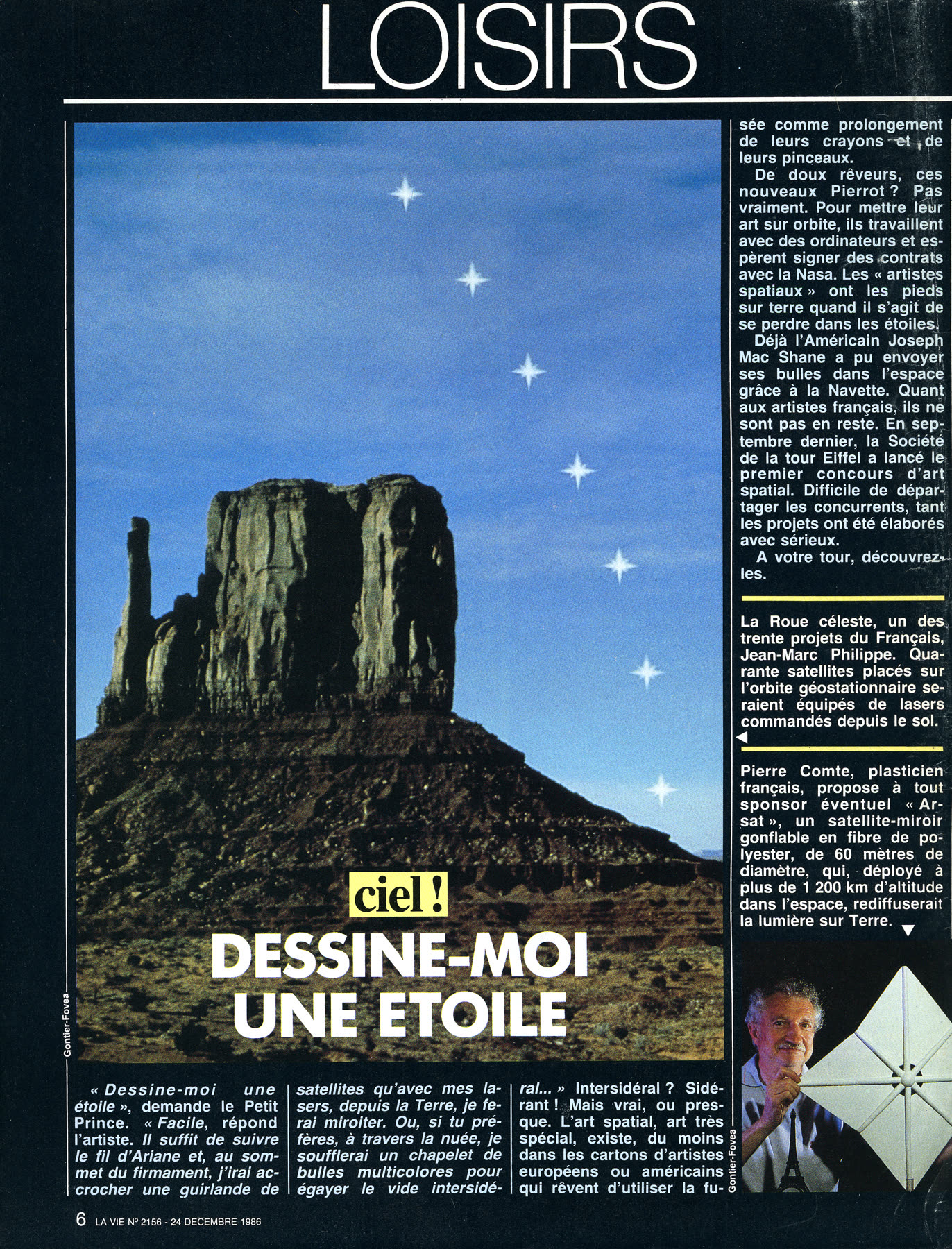
The Celestial Wheel, the first space project conceived by Jean-Marc Philippe in 1975, consisted of lighting up, briefly and on rare, carefully chosen occasions, a crown of 40 artificial stars around the Earth. These stars were to have a magnitude equal to or greater than that of Venus when it shines at its most brilliant. Their light would have been emitted from 40 equidistant geostationary satellites by means of a device remotely controlled from the ground.
This crown of artificial stars would have been visible mainly at night, from every point on the globe, by the whole of humanity. It would have lit up for a few seconds each time, on the occasion of symbolic and political events.
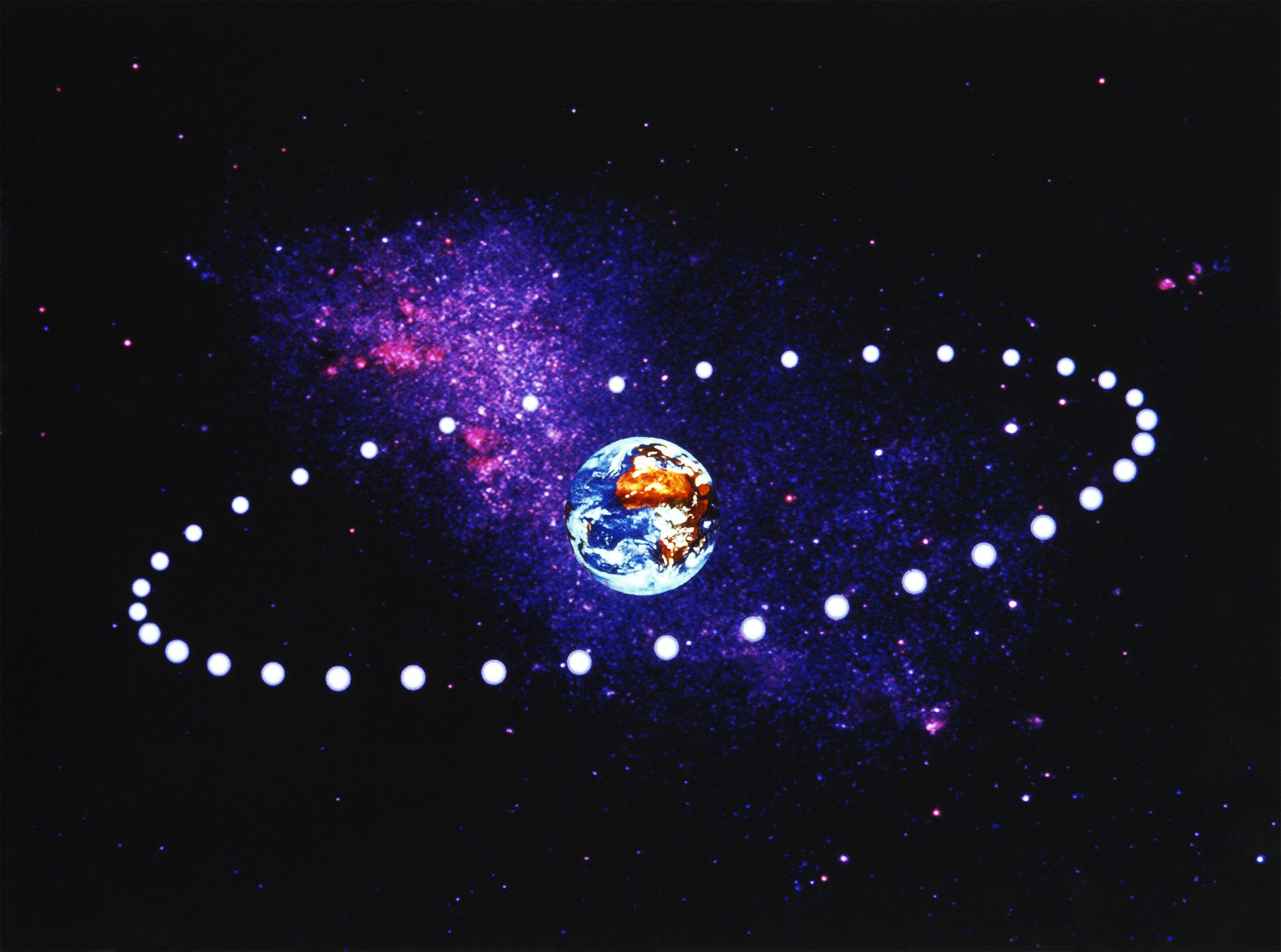
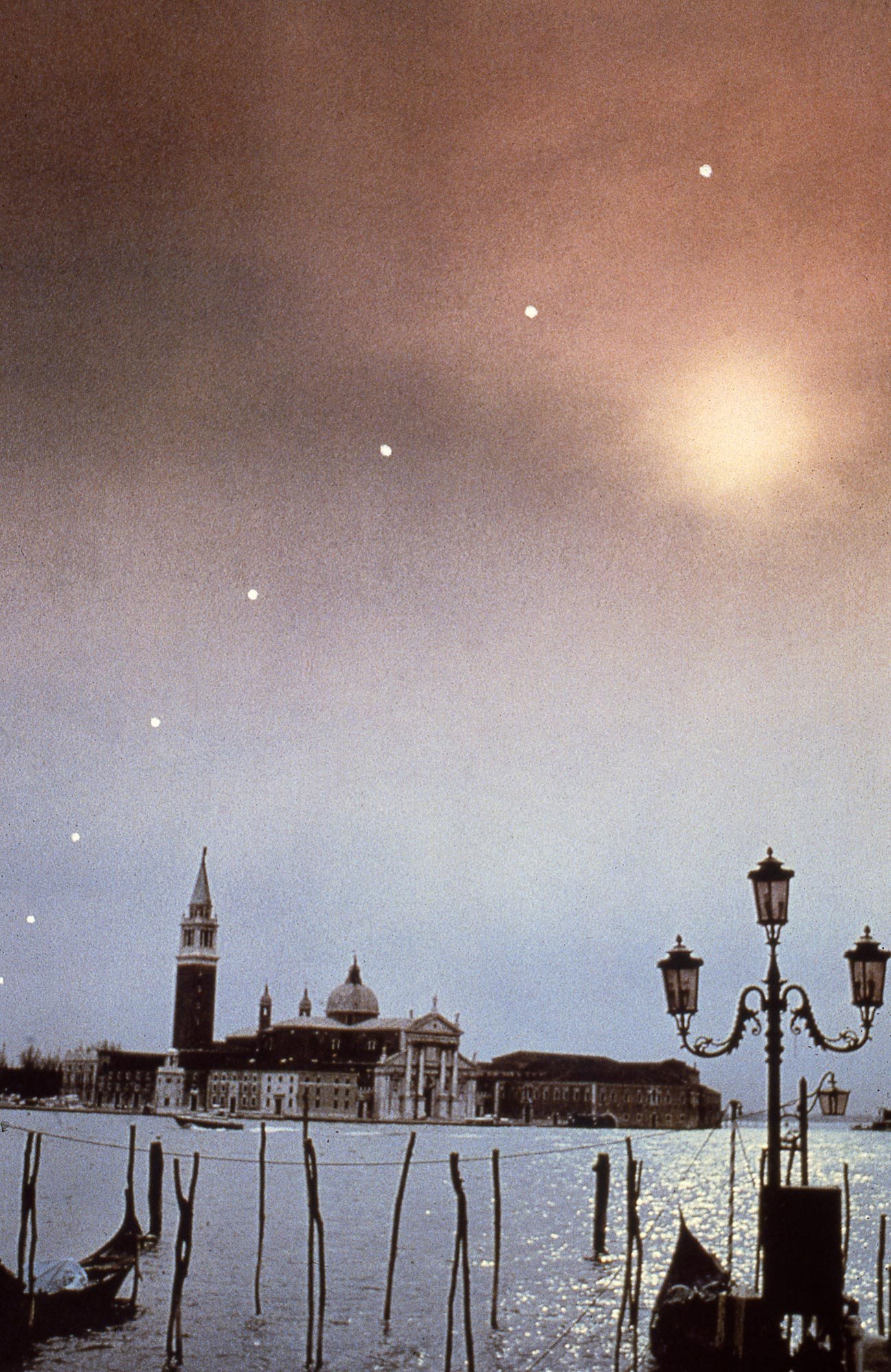
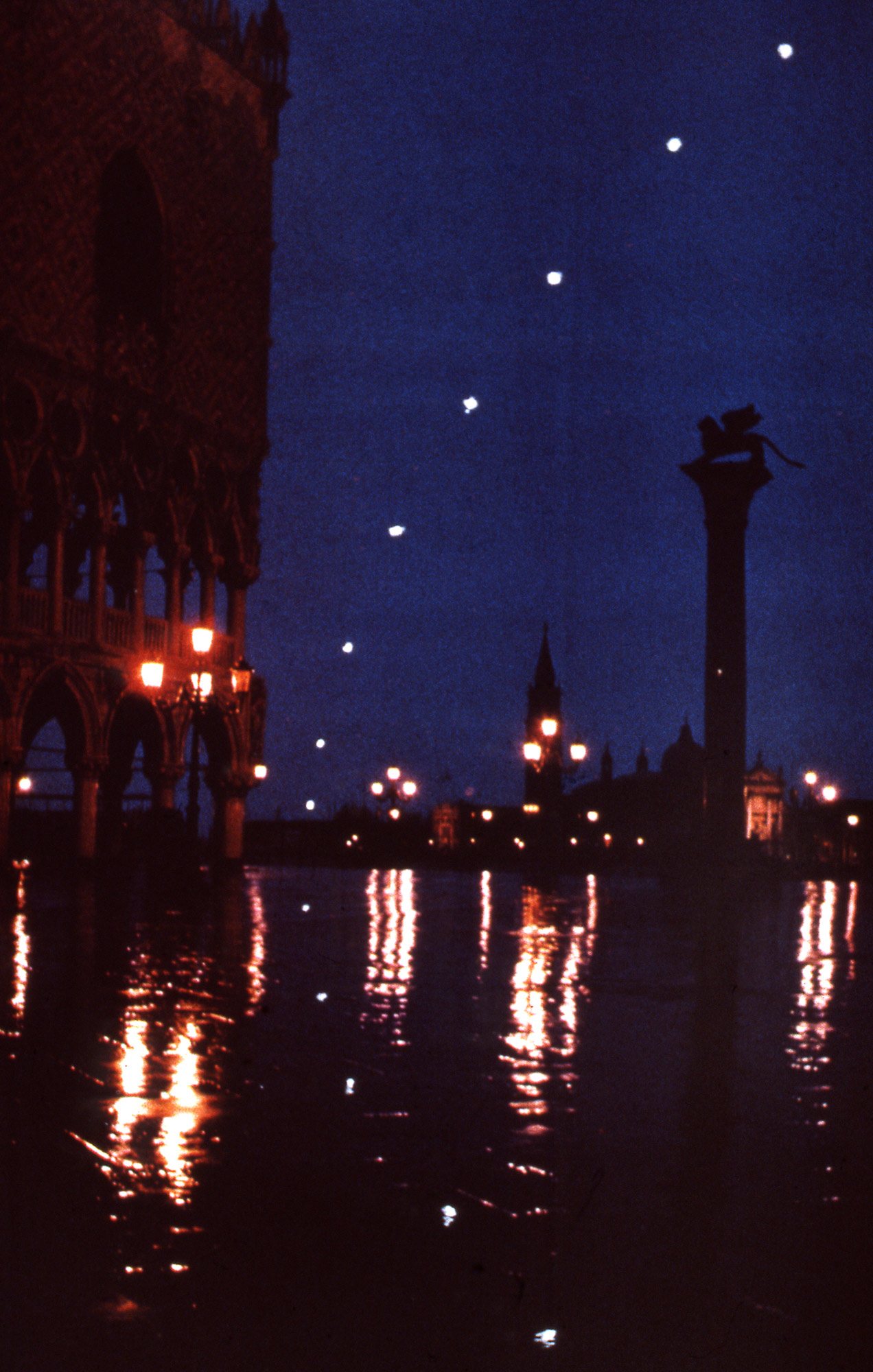
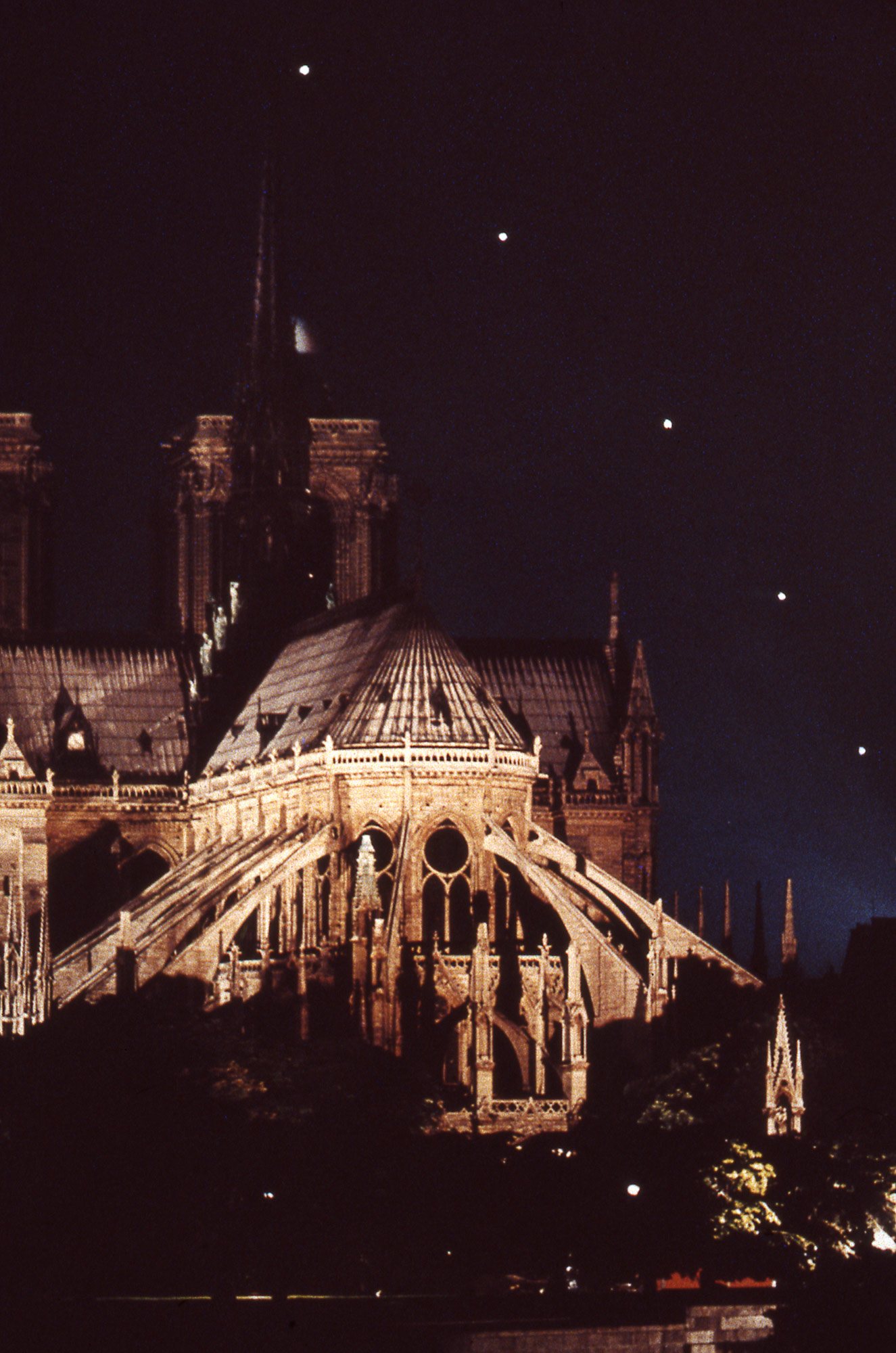
Great Celestial Wheel, artist's impressions, made by Jean-Marc Philippe, 1986.
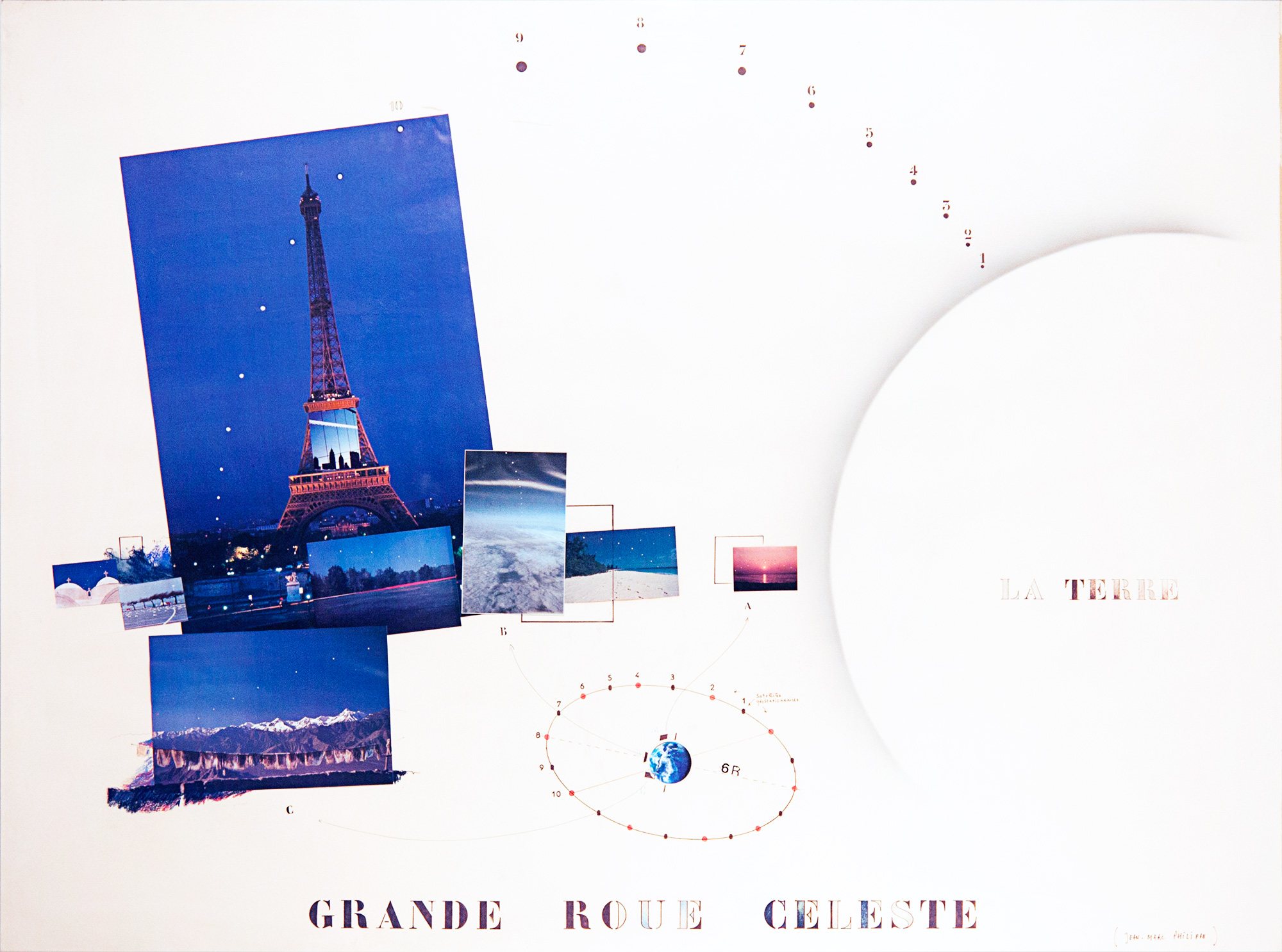
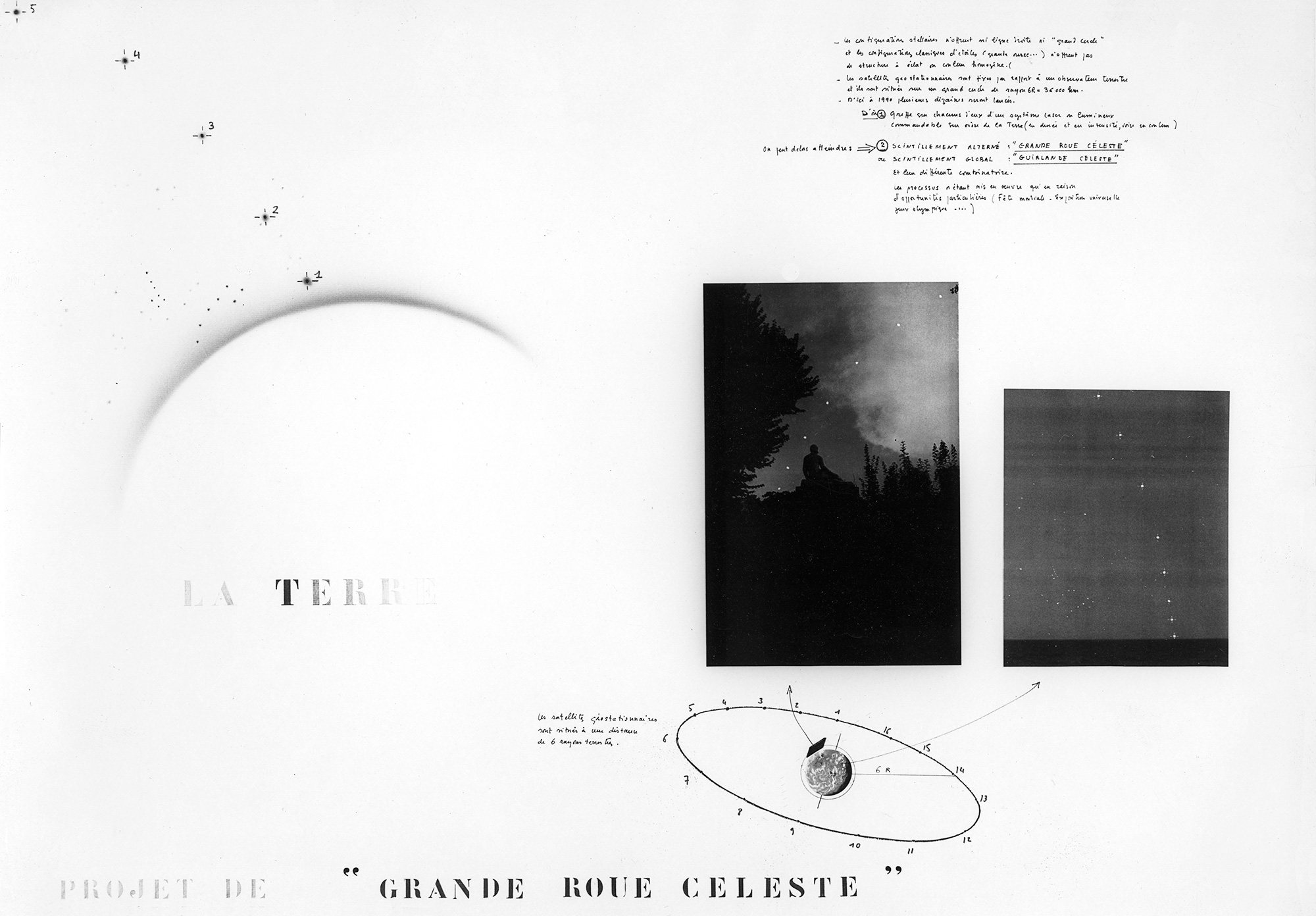
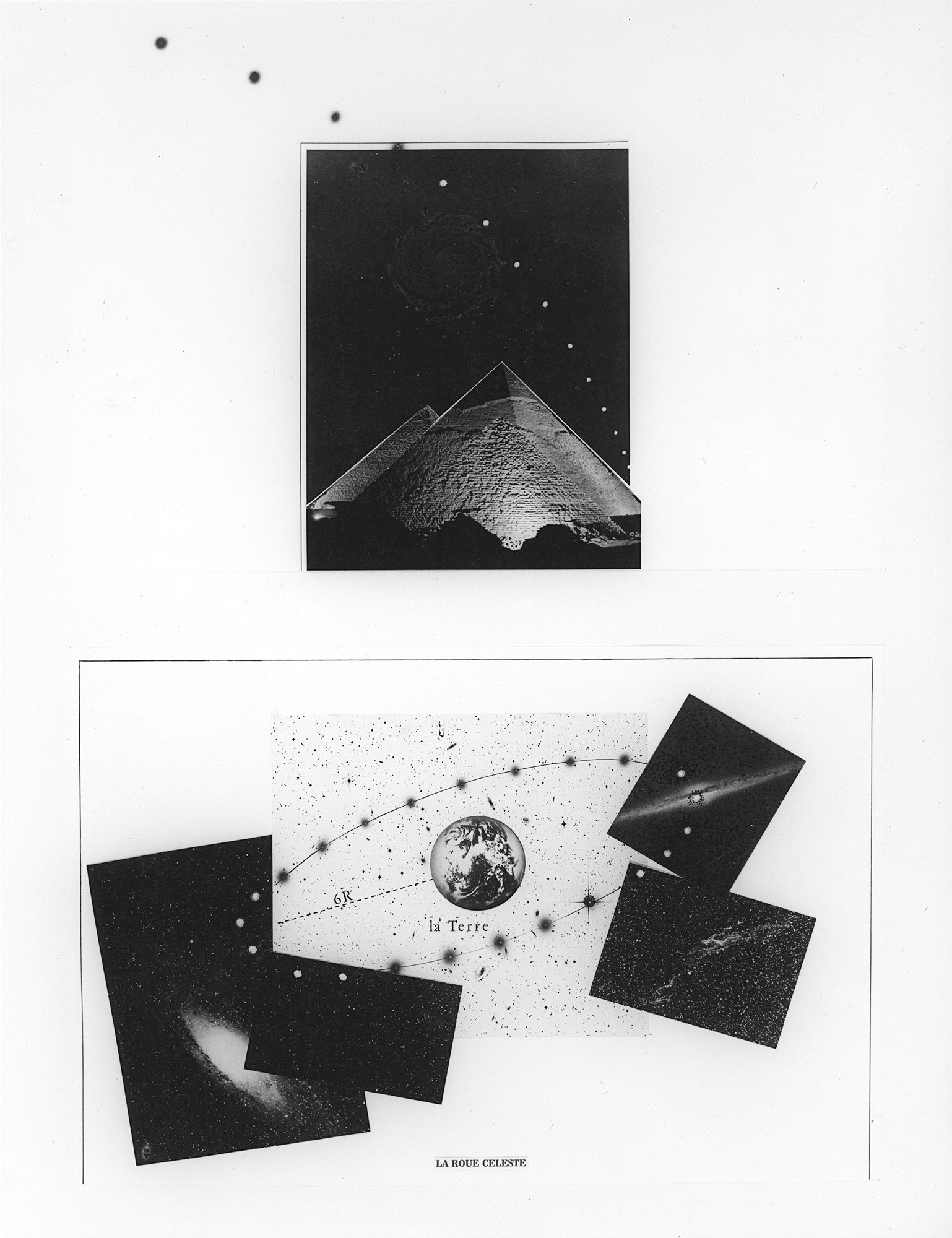
Great Celestial Wheel, presentation boards, made by Jean-Marc Philippe, 1986.
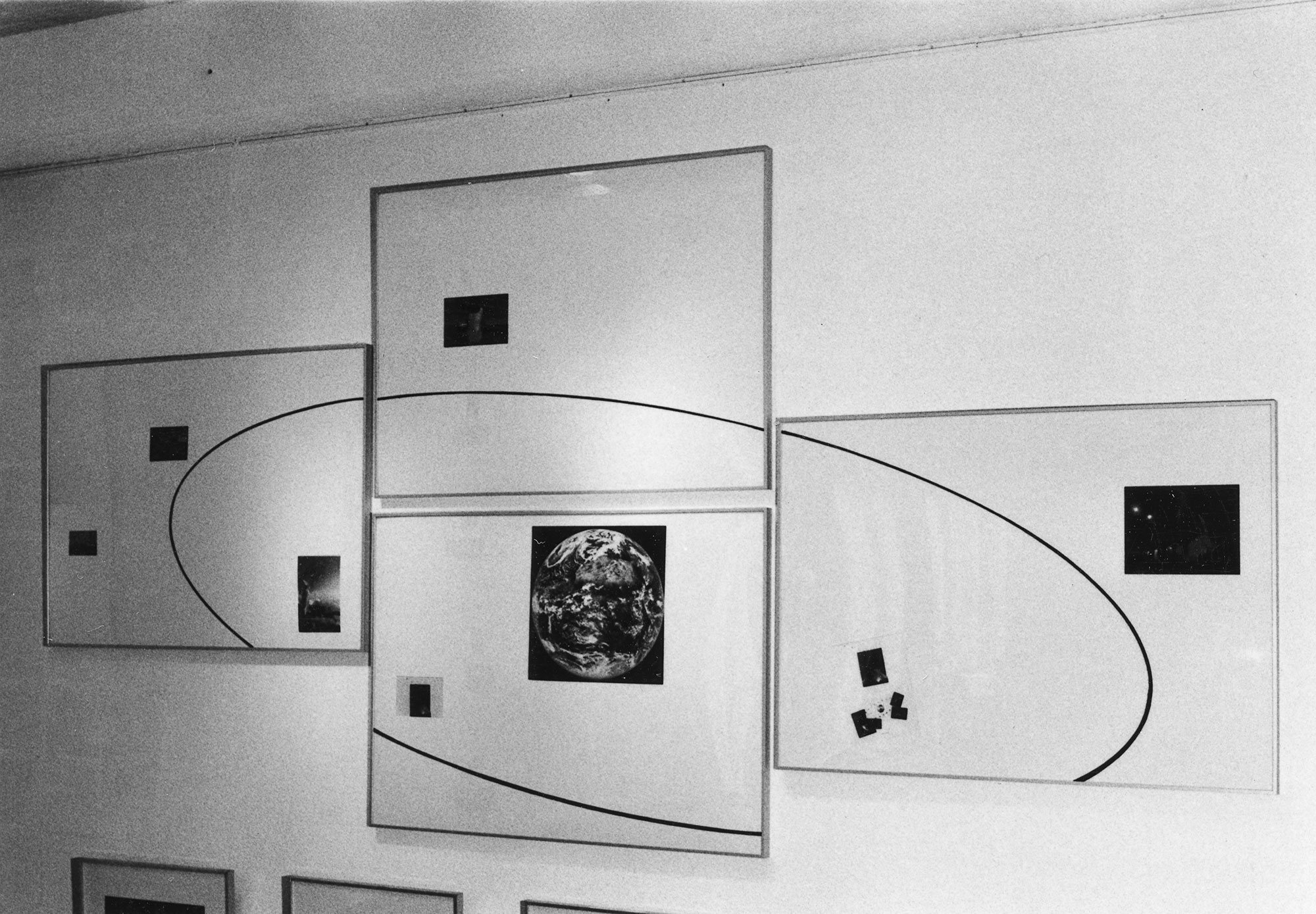
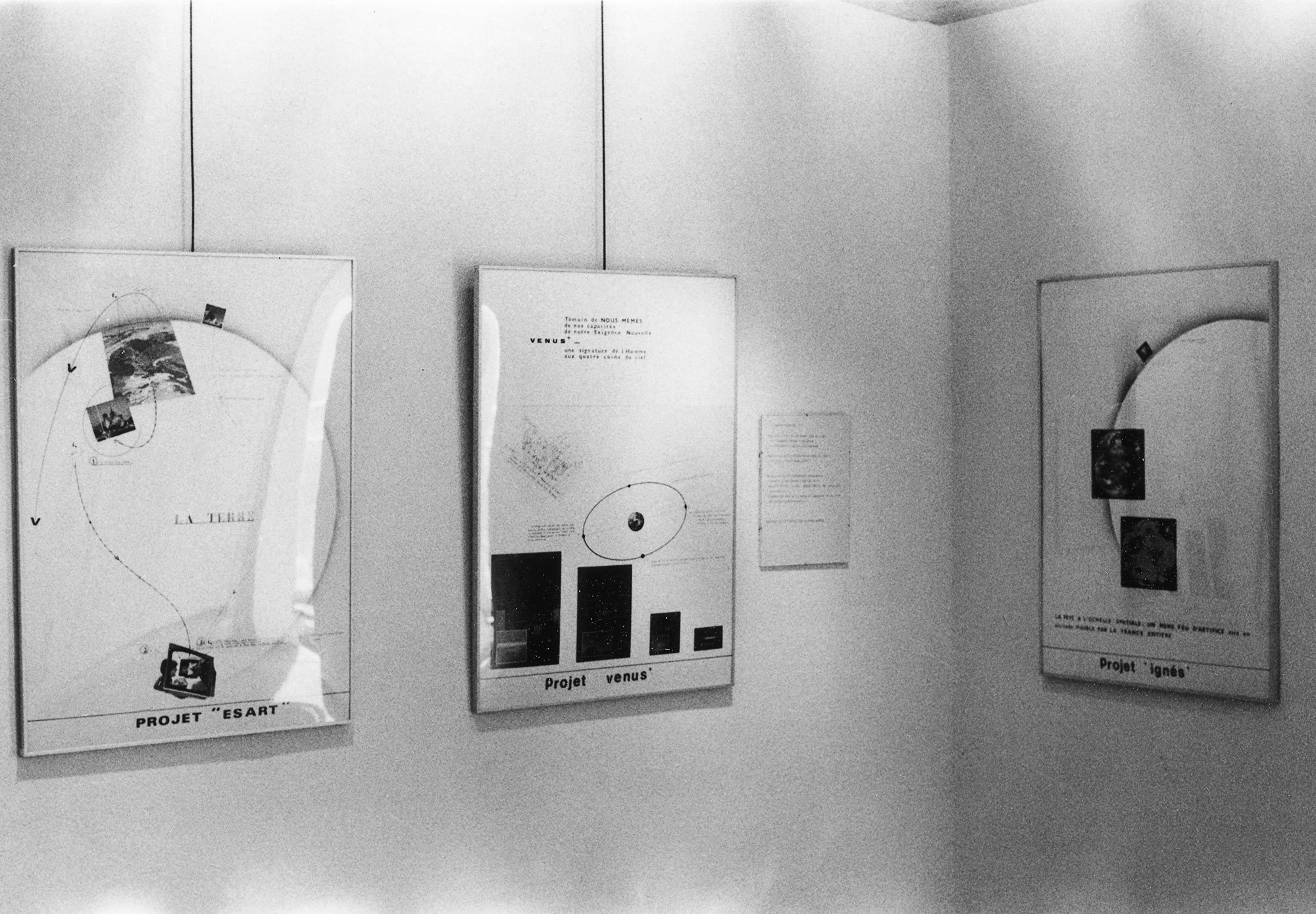
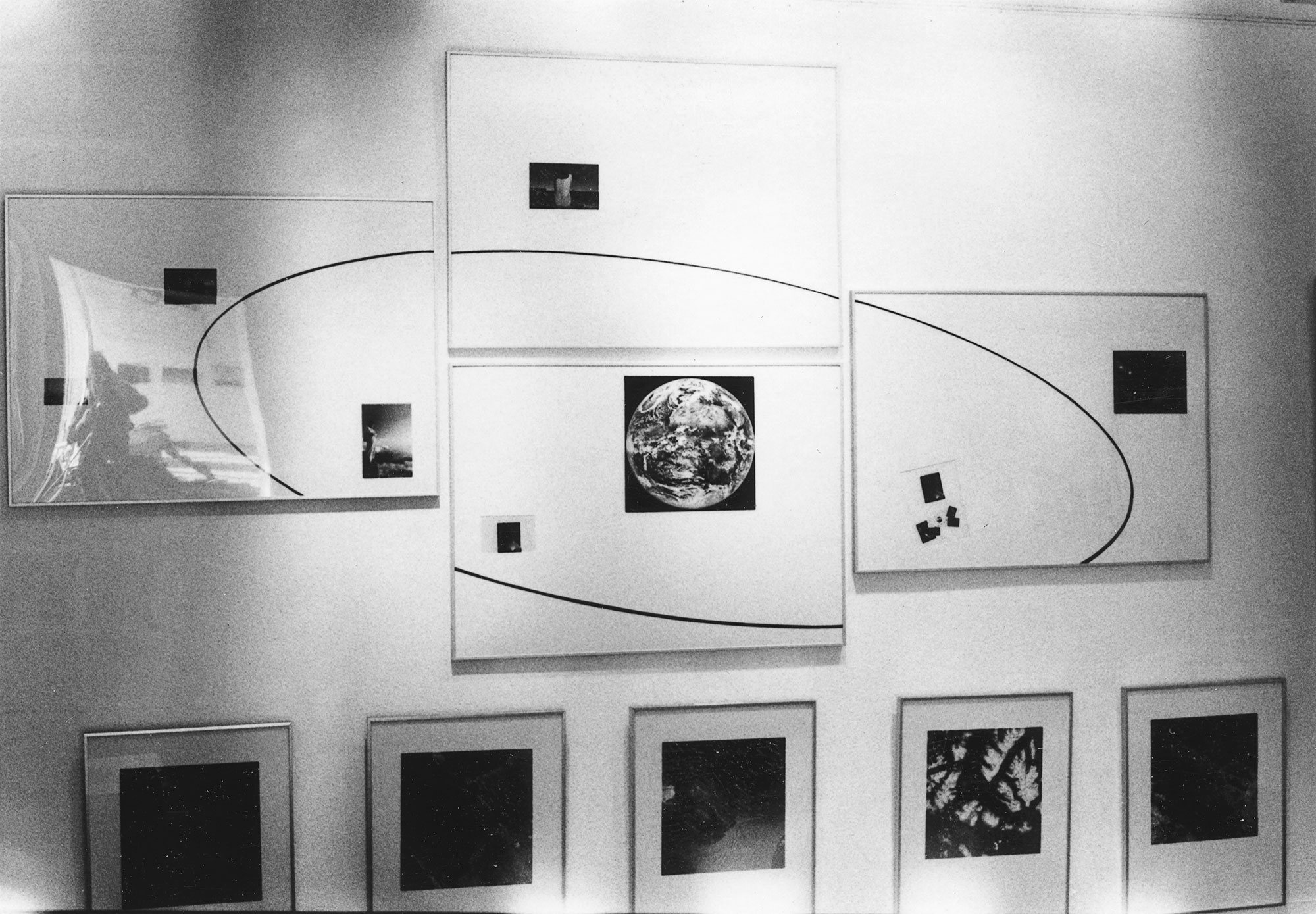
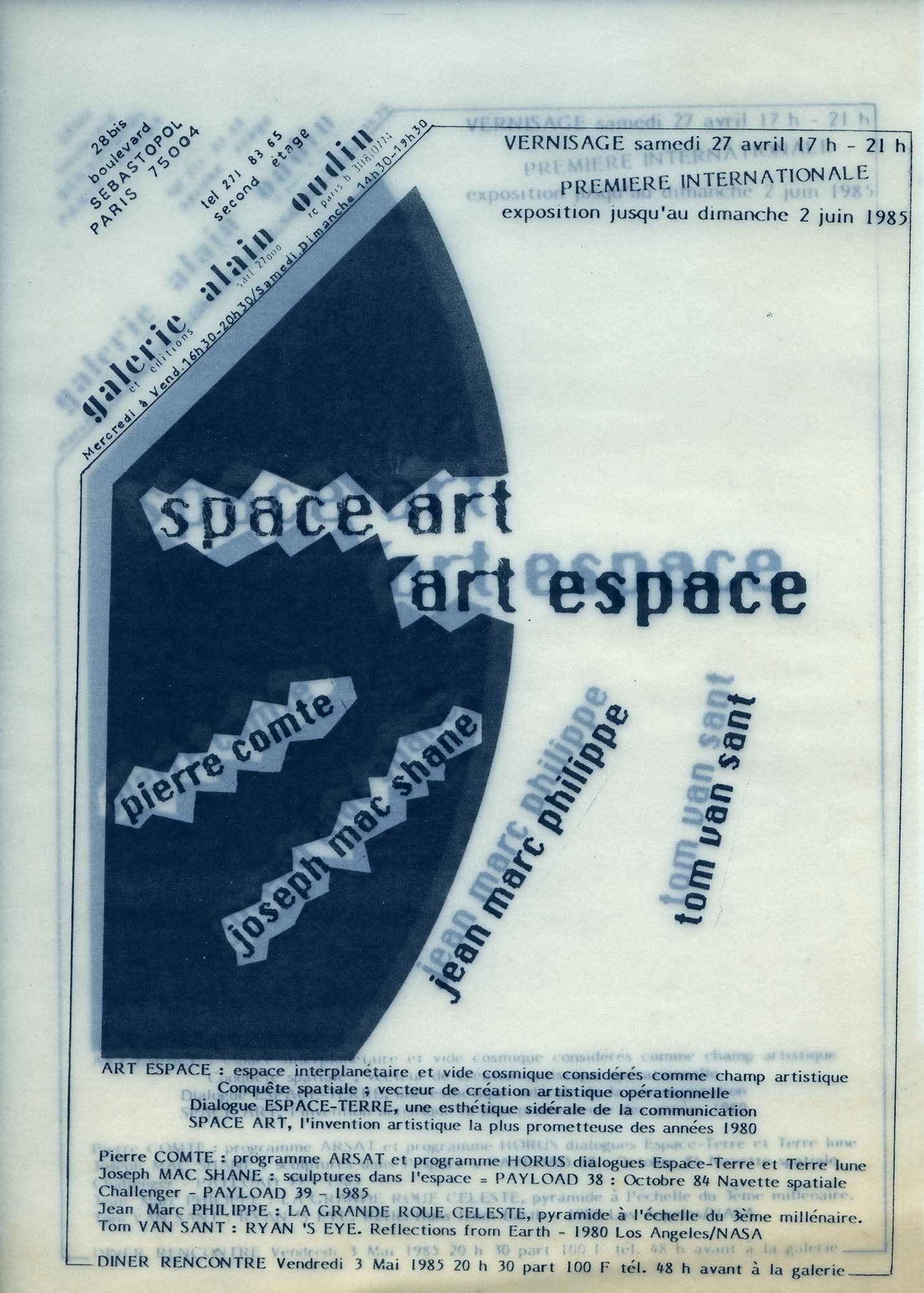
Great Celestial Wheel, presentation at the exhibition “Space Art / Art Espace” at the Galerie Alain Oudin, 1985. Photographs: Jean-Marc Philippe, 1985.
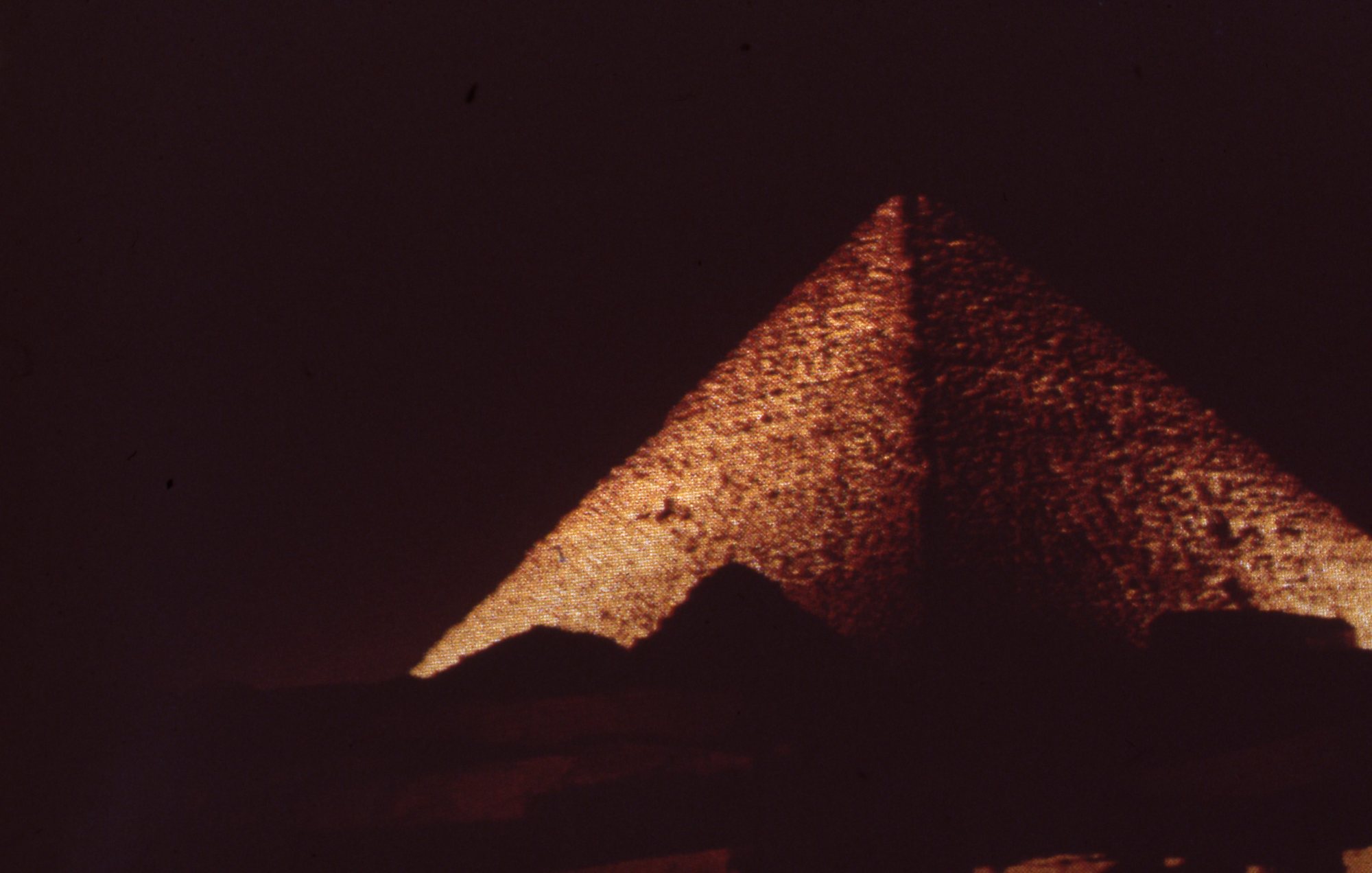
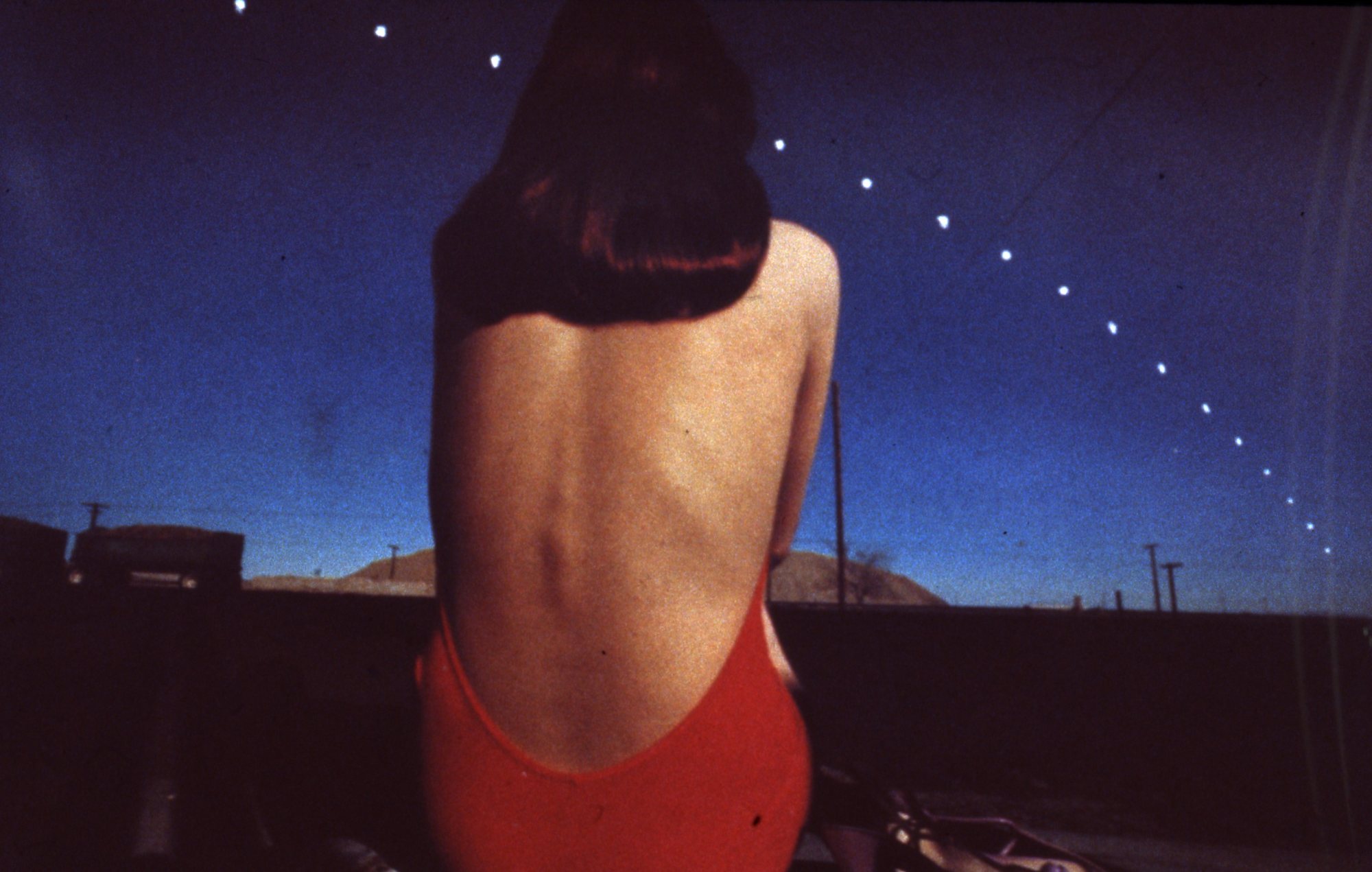
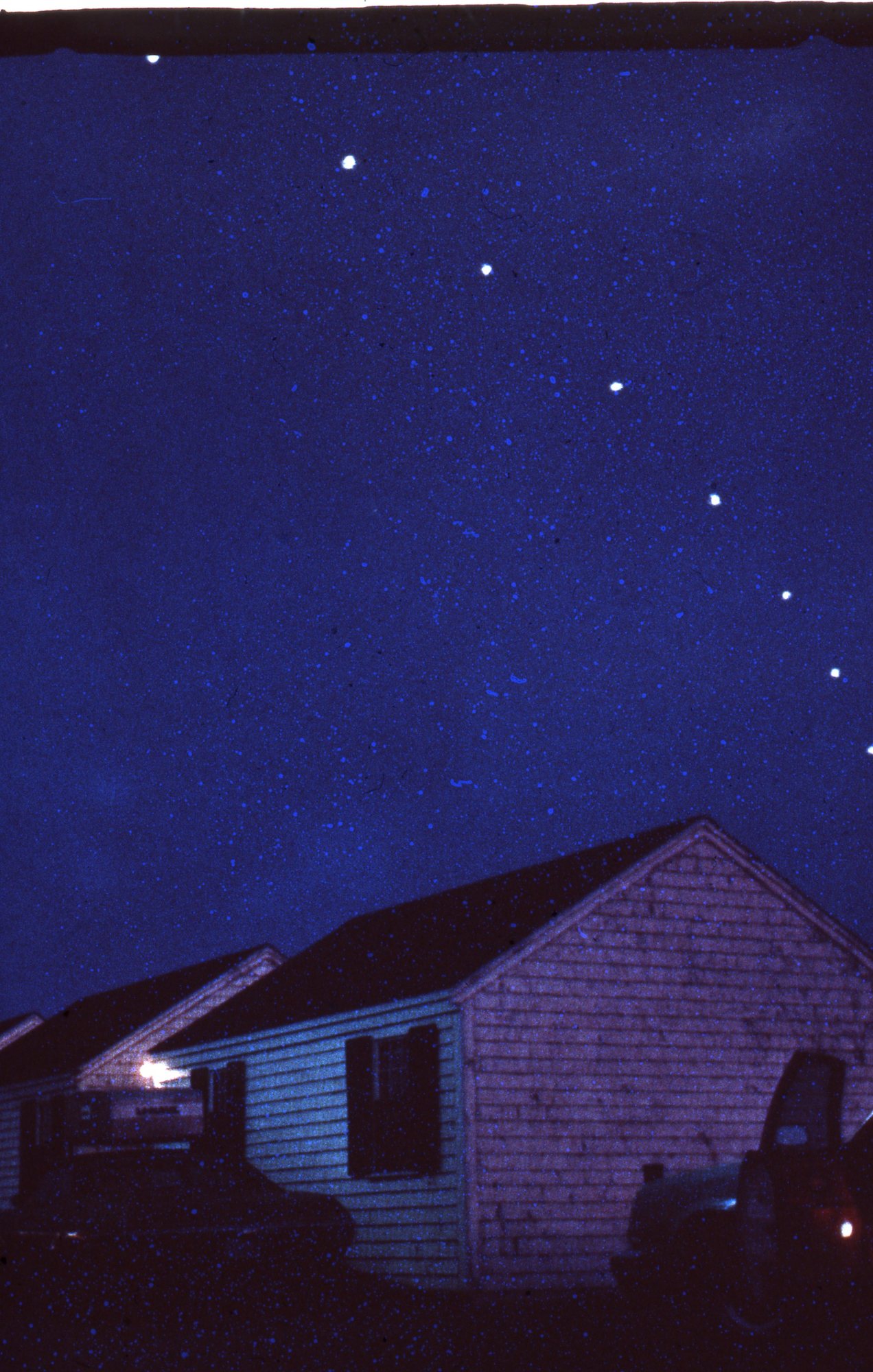
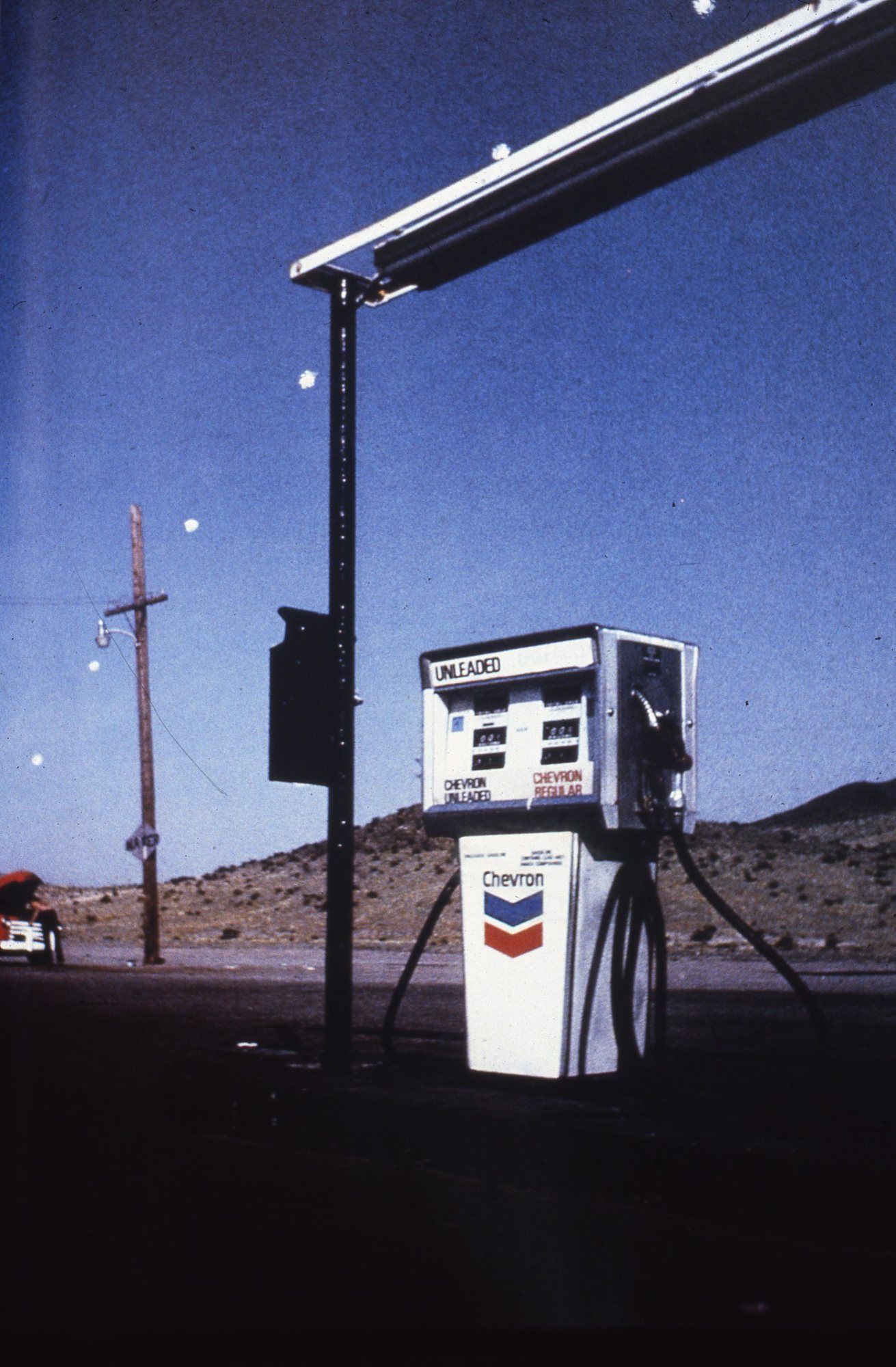
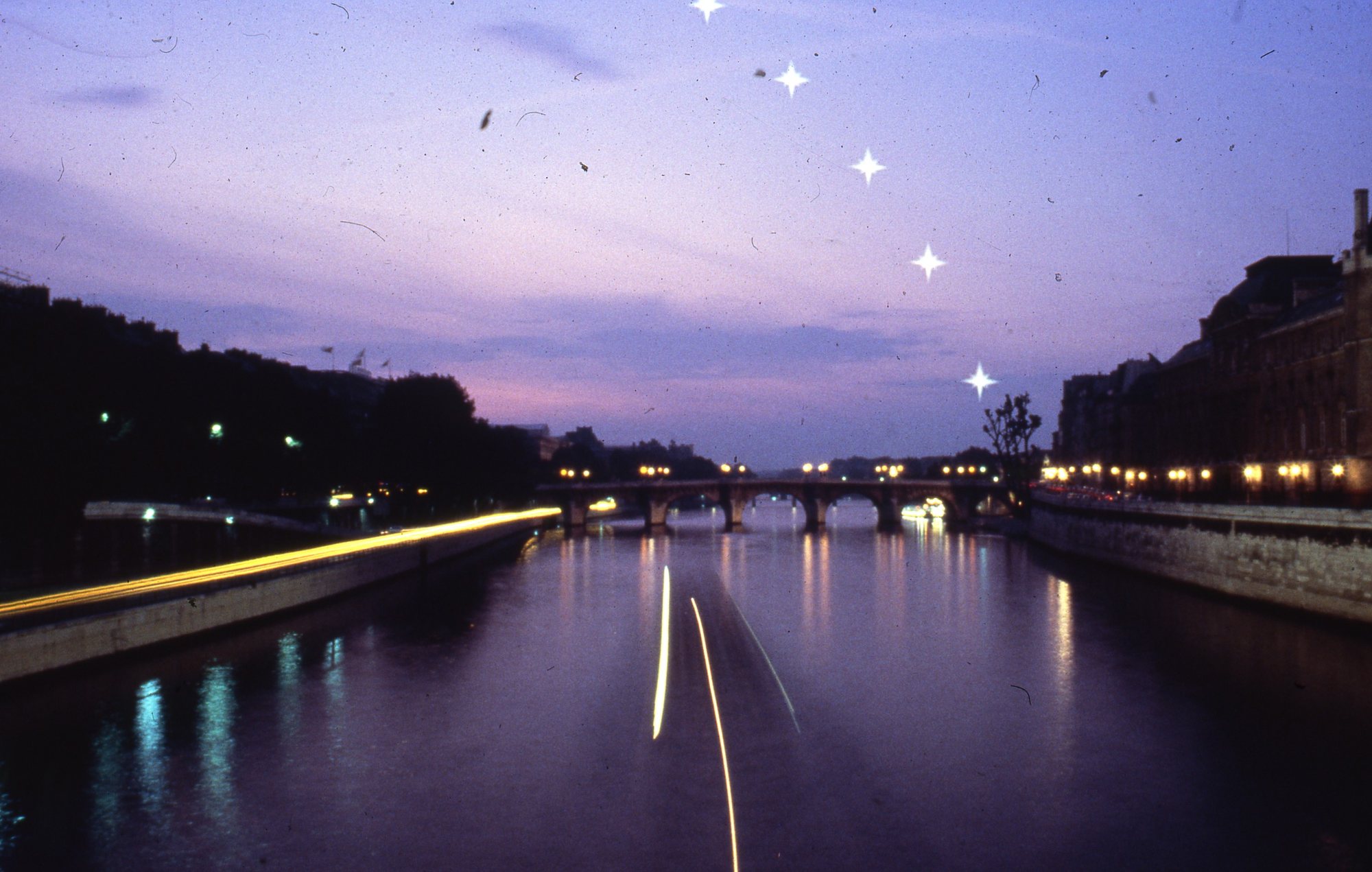

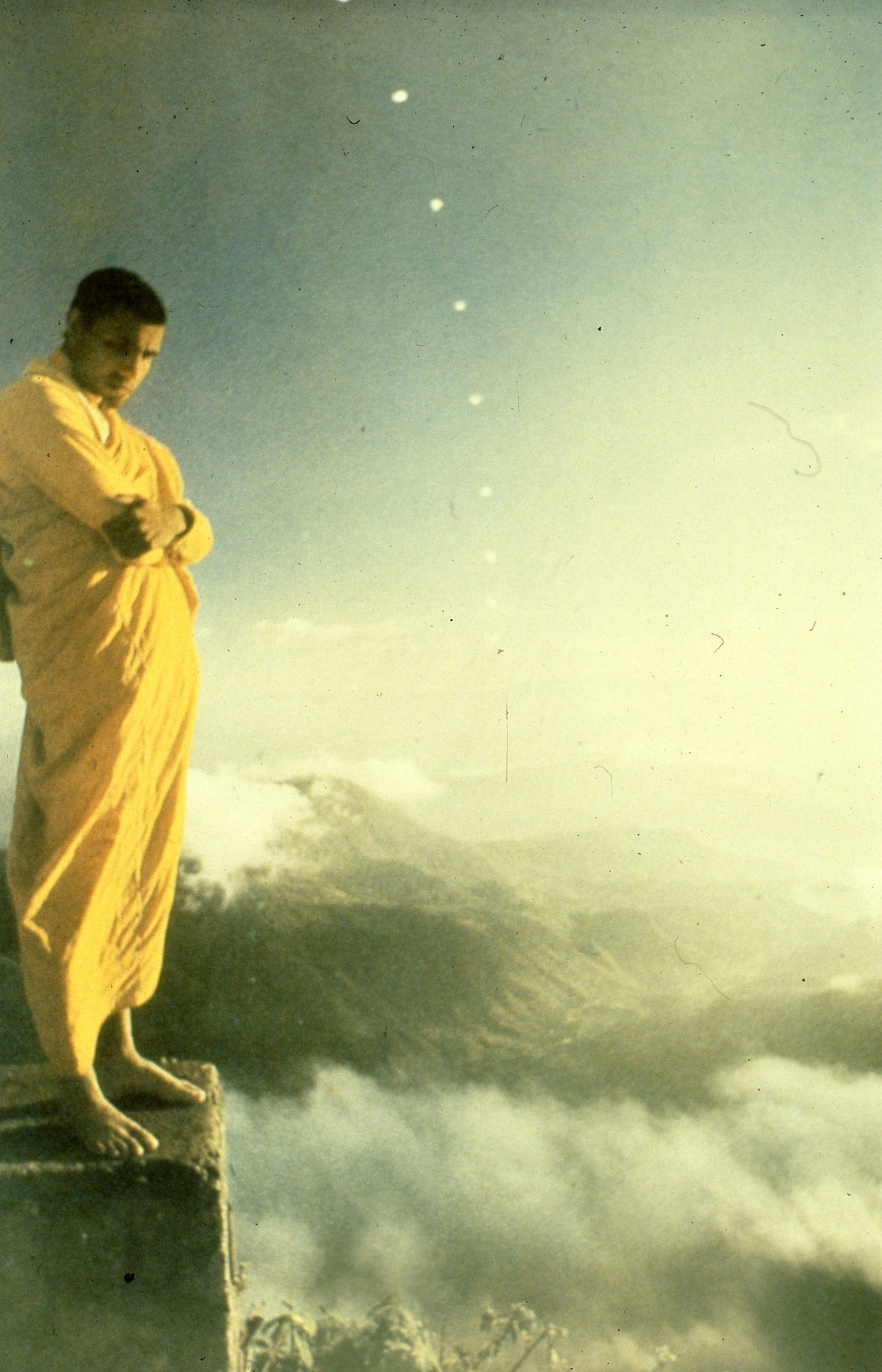
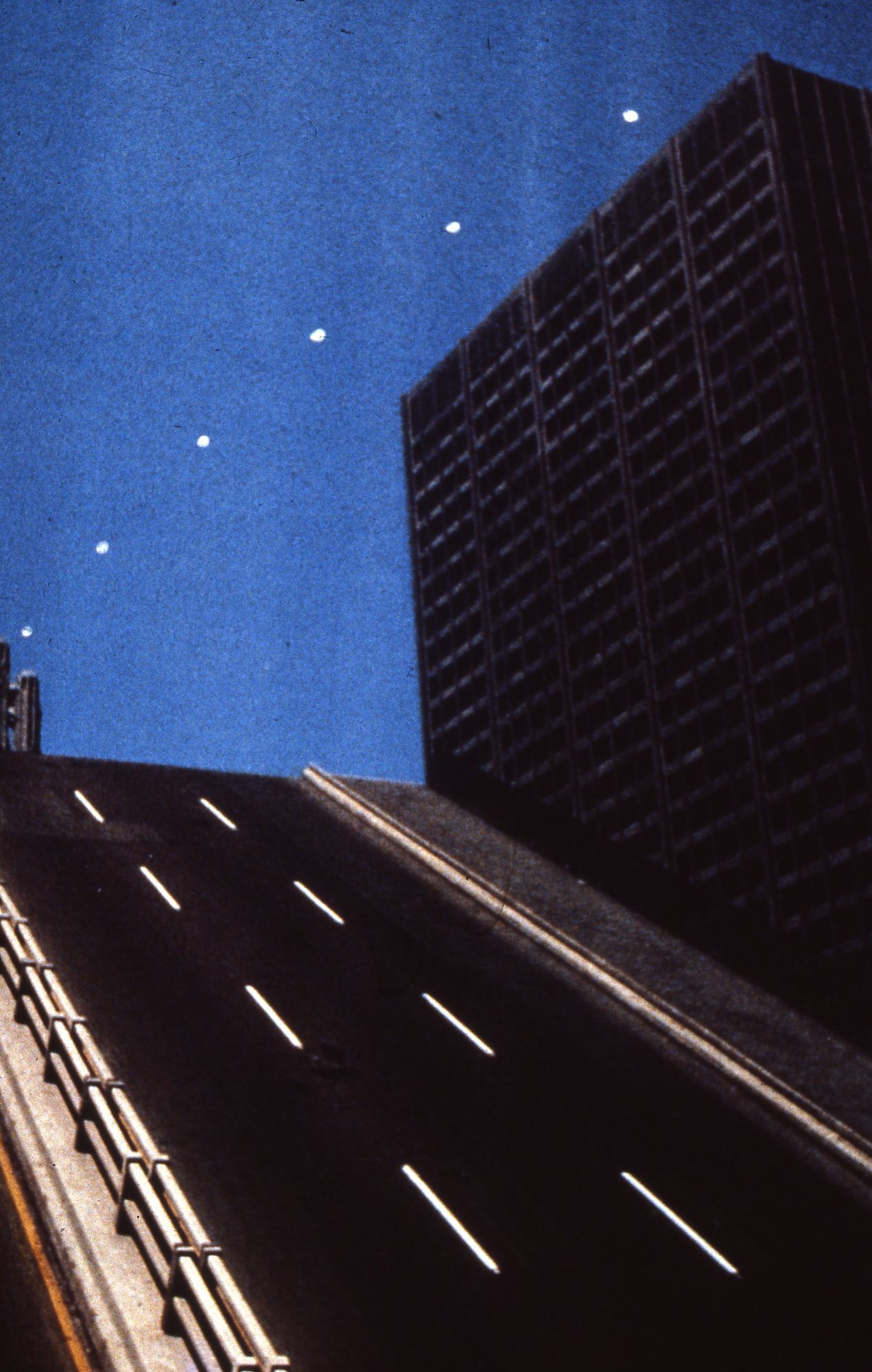
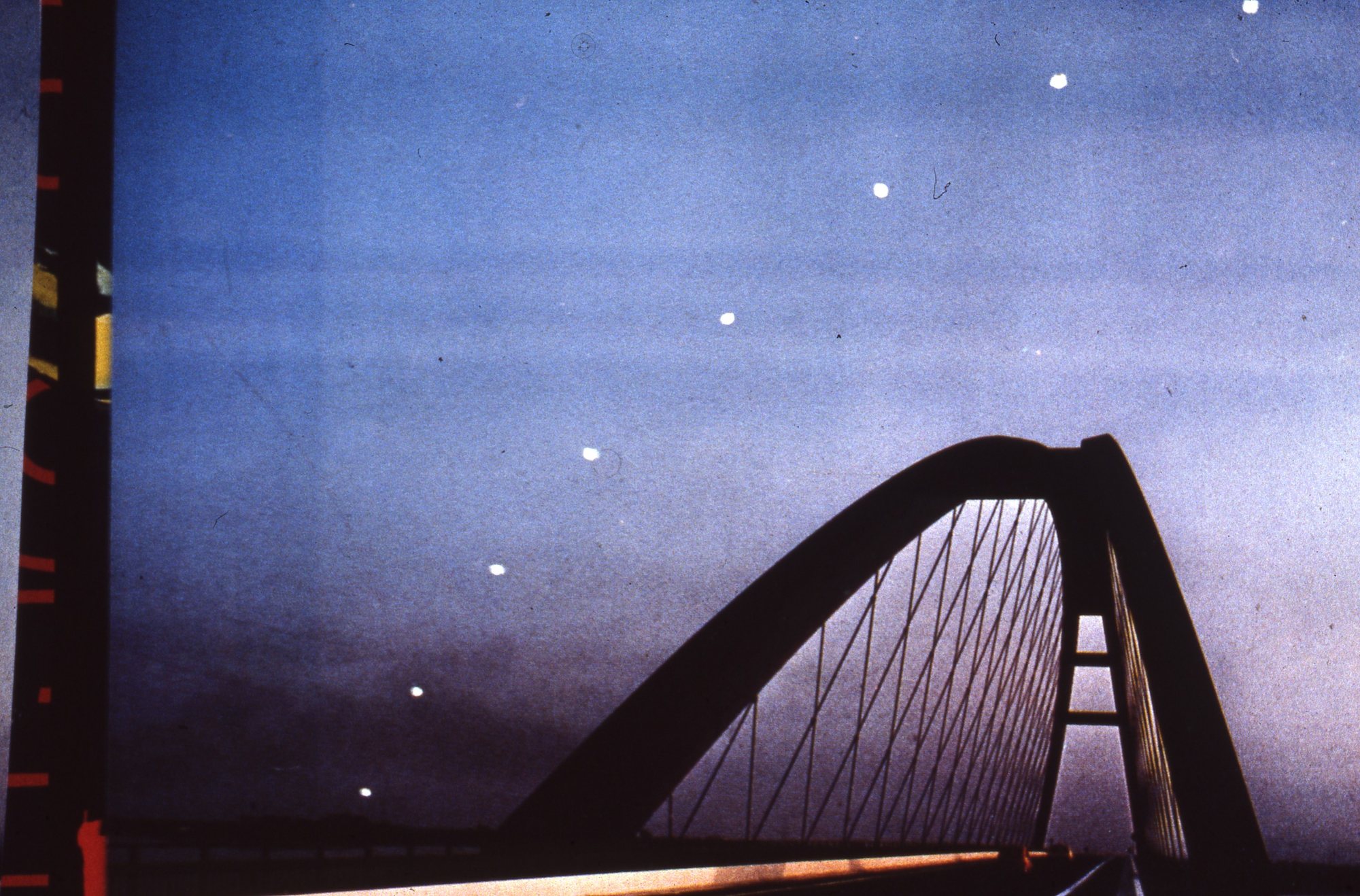
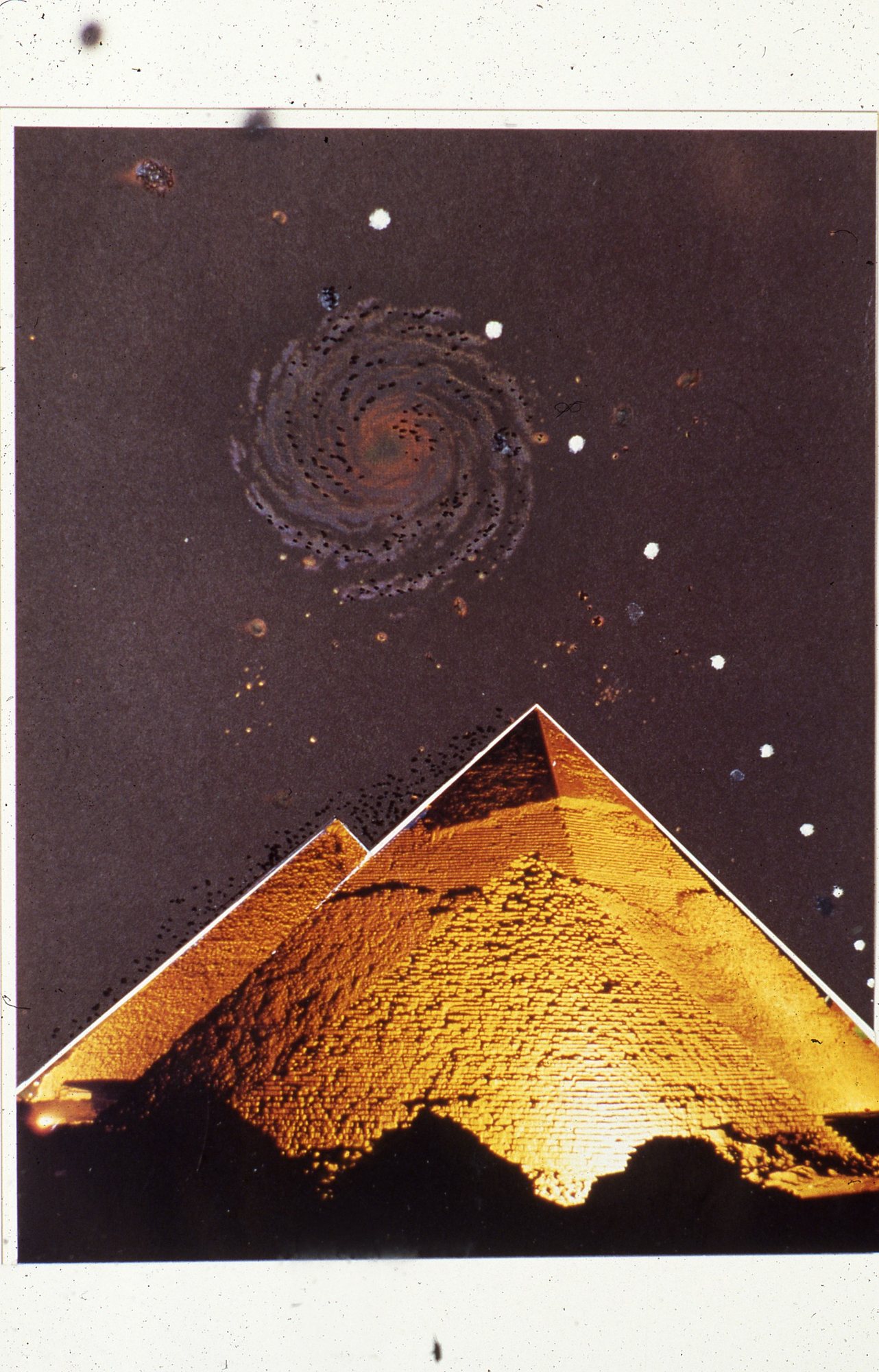
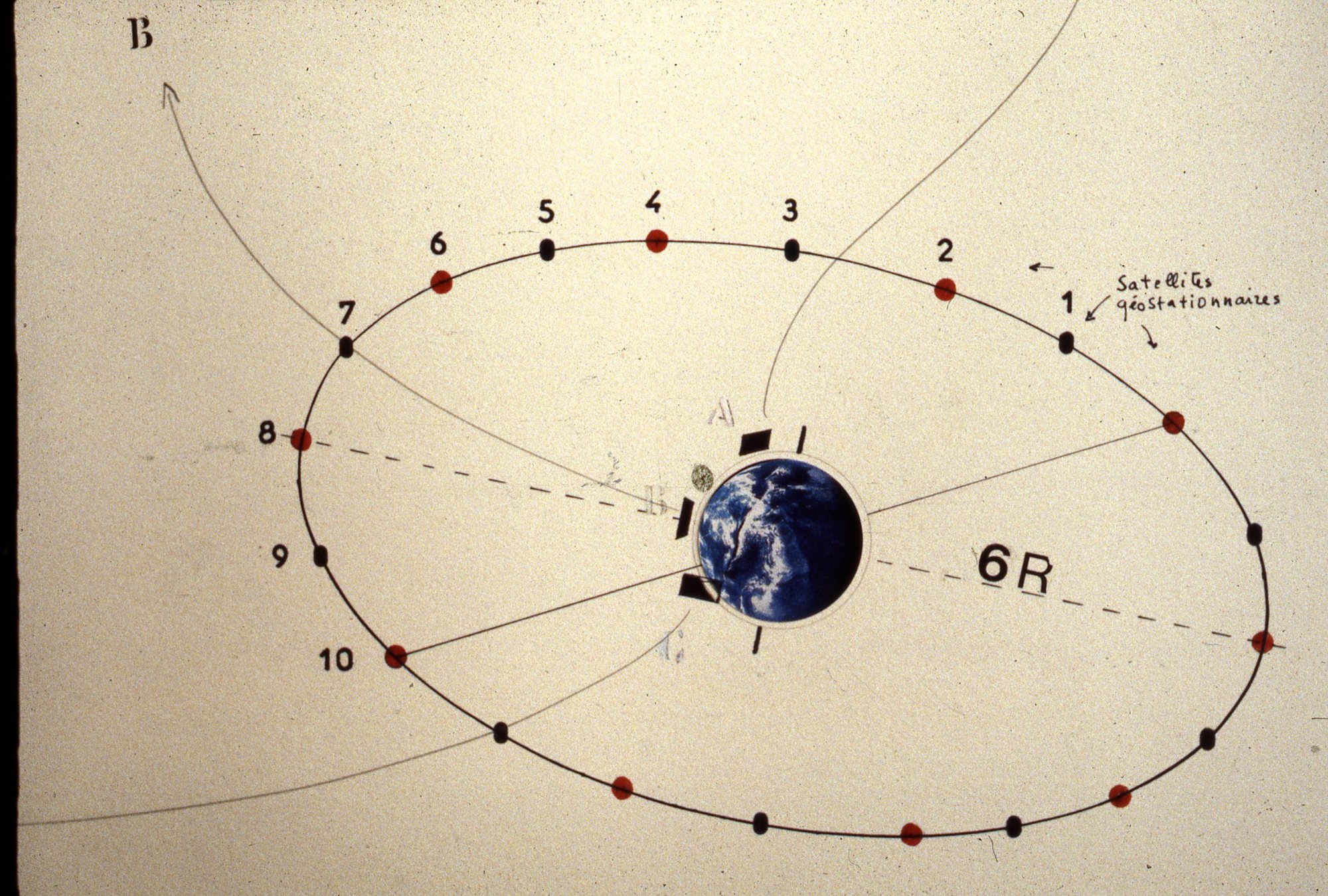
Great Celestial Wheel, stagings and artist's impressions on slides, made by Jean-Marc Philippe.
Venus +
Conceived around 1980 and never carried beyond the project stage, Venus + was to make an artificial star appear in the sky: the first to show itself at nightfall, the last to vanish at dawn. Jean-Marc Philippe presented it, together with the Celestial Wheel and the EsArt concept, among the principles of artificial light phenomena he had described between 1975 and 1980: produced by the reflection of light, by laser beams or by the emission of electrons, they were to be visible from the whole planet.
The World Space Art Committee (UNESCO, 1986)
From 1980 onwards, Jean-Marc Philippe presented the Celestial Wheel at more than fifteen conferences, in Venice, Tokyo and Athens. Everywhere the same objection came back: by what right should a work inscribe itself in everyone's sky? In Tokyo, in 1983, a Japanese minister replied to him that “his sky was his sky”. He then decided to give up carrying the project alone and to reflect first on the ethical conditions of any space art.
On 3 November 1986, for the fortieth anniversary of UNESCO, he convened at the Maison de l'UNESCO in Paris, under the aegis of the Académie européenne des sciences, des arts et des lettres, a committee of experts in the presence of representatives of the main space agencies. His working paper proposed that the first work of space art be entrusted to an ethics committee: a worldwide call for ideas, a consultation of humanity, an anonymous work like the cathedrals, collective funding. The committee judged the creation of a “World Space Art Committee” desirable and recommended that of a “World Ethics Committee for a Peaceful Use of Space”.
Read the 1986 working paper, as well as the texts Phréatique (1989) and Space Art (1994).
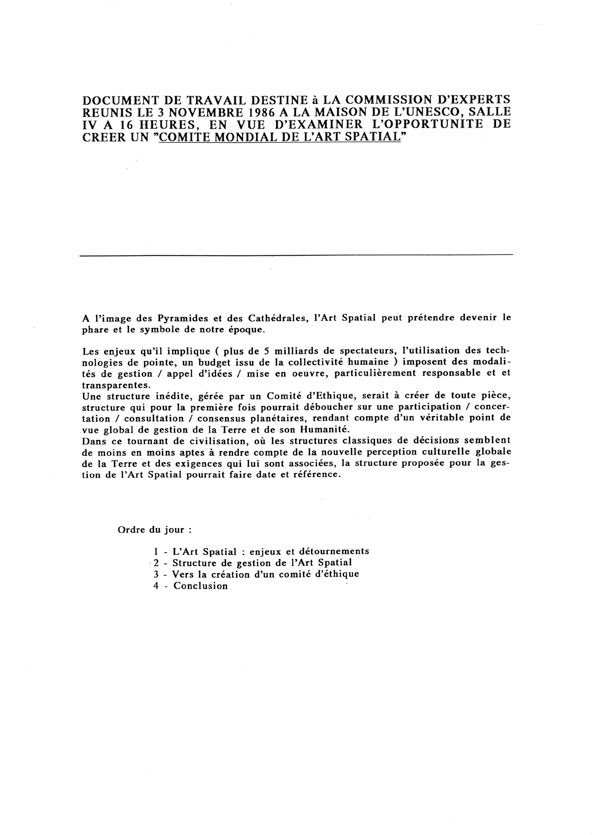
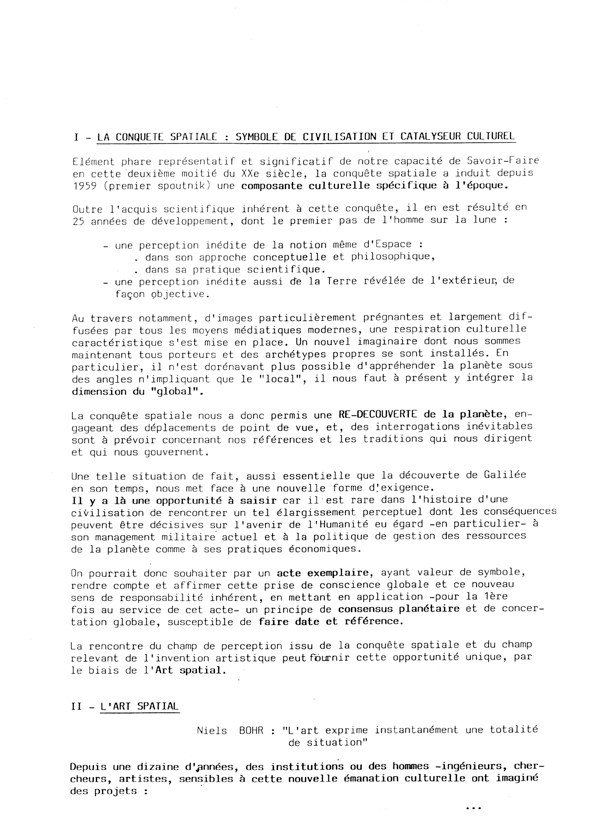
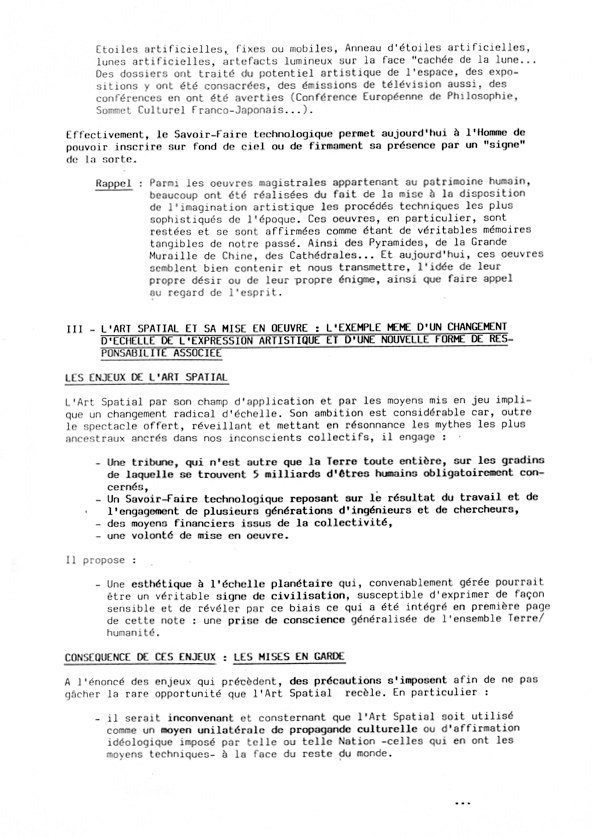
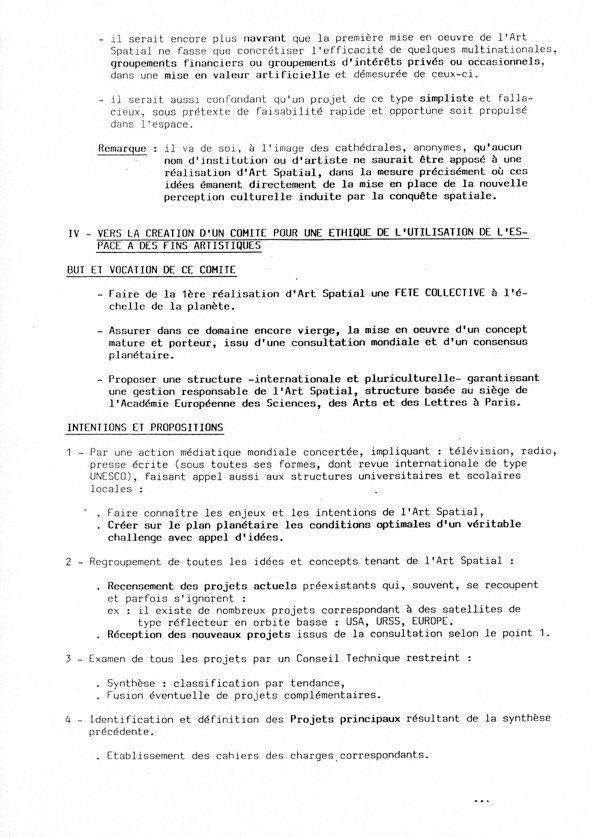
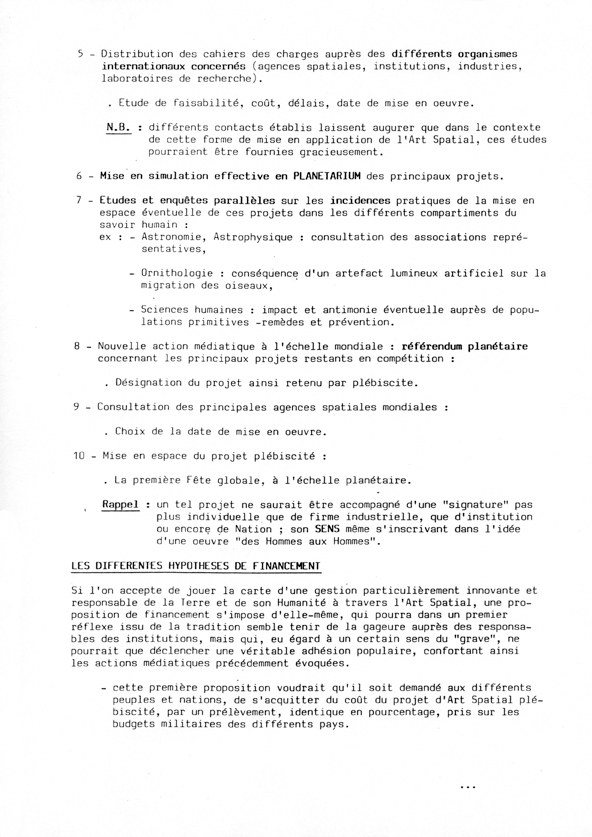
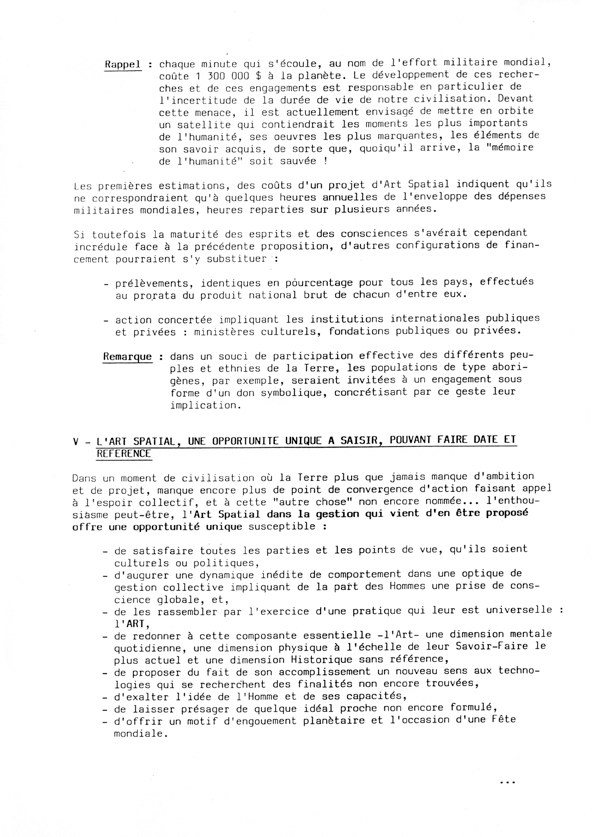
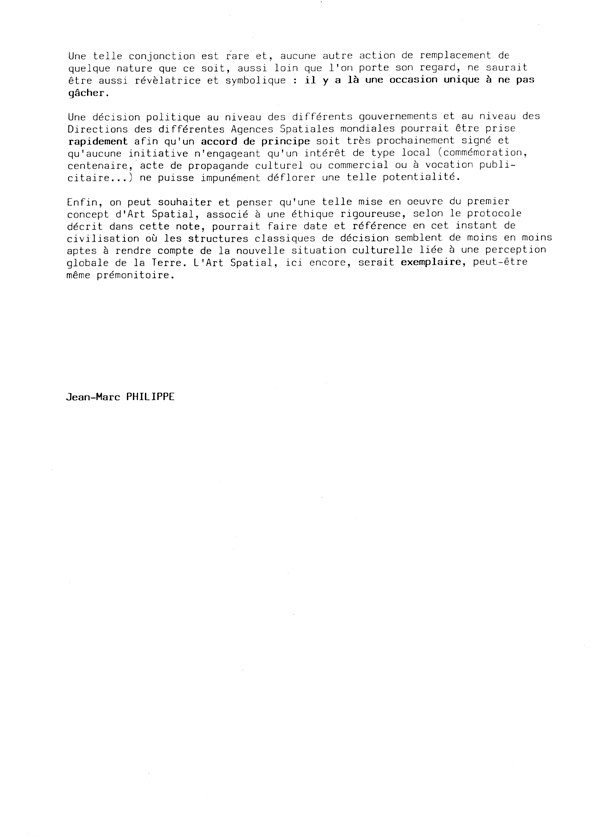
Working paper submitted to the experts convened on 3 November 1986 at the Maison de l'UNESCO, 7 pages.
Listen
Recordings © Radio France / INA and Radio suisse romande, made available for documentary purposes.
Writings
By Jean-Marc Philippe
- The Celestial Wheel — L'Hippocampe, no. 2, April 1984, pp. 55-58.
- Artistic Invention and its Metamorphosis — in Modernes et après : « Les Immatériaux », Paris, Autrement, 1985, pp. 173-182.
- World Space Art Committee: Working Paper — Typewritten working paper (7 pages) submitted to the committee of experts convened on 3 November 1986 at the Maison de l'UNESCO, Paris.
- When Art, Space and Dreams Meet… and When Reflection Becomes Necessary — Phréatique. Langage et création, no. 49, summer 1989, pp. 107-116.
- From the Infinitely Small to the Infinitely Large: Matter / Memory / Interactivity / Cosmos — in Les Transinteractifs, proceedings of the conference of 4 and 5 November 1988 (Centre culturel canadien, Paris), “Déchiffrages” series edited by Frank Popper, pp. 82-87.
- Space Art — in Raymond Daudel and Nicole Lemaire d'Agaggio (eds), La science et la métamorphose des arts, Paris, Presses universitaires de France, 1994, pp. 141-160.
- Cultural Matrix and Artistic Creation: From the Classical Practice of One's Art to Transdisciplinarity — in Michel Cazenave and Basarab Nicolescu (eds), L'Homme, la science et la nature : regards transdisciplinaires, Aix-en-Provence, Le Mail, “Science et conscience” series, 1994, pp. 232-264.
On Jean-Marc Philippe
- The White Work (Galerie Eolia catalogue) — Jean-Marc Philippe. Œuvres récentes 1976-1984 : l'Œuvre blanche, Paris, Galerie Eolia, “Les Cahiers Eolia” no. 2, 1985.
- Portrait of the Artist on Video — Gilles Tordjman, “Portrait de l'artiste en vidéo”, Revue d'esthétique, no. 10 (“Vidéo-Vidéo”), Toulouse, Privat, 1986, pp. 155-158.
References and links
Books, catalogues and journals
- Alain Oudin, “L'Art spatial”, Autrement, no. 77 (“L'Espace super star”), February 1986, pp. 196-197.
- Pierre Poix, Ils ont rêvé l'espace. De Plutarque au Space Art, Paris, Hatier, “Regard sur l'espace” series, 1992, chapter “Les maîtres du Space Art”, pp. 153-163.
- Annick Bureaud, “L'art de l'ère spatiale”, Art Press, no. 269, June 2001.
- Adrien Goetz, “Les yeux dans les étoiles”, Le Journal des Arts, no. 551, 1st October 2003.
- Sophie Bruère and François Gauvin, “Terre || Lumière”, Figures de l'Art, no. 17, 2009, pp. 226-227 (DOI).
- Roger F. Malina, “Space Art As Public Art: The Artist As Space Researcher”, Delicate Balance: Technics, Culture and Consequences, IEEE, October 1989, pp. 260-266 (DOI).
- Roger F. Malina, “In Defense of Space Art: The Role of the Artist in Space Exploration”, International Astronomical Union Colloquium, vol. 112, January 1991, pp. 145-152.
Radio
- Jacques Pradel, Adrénaline, France Inter, 16 July 1986.
Online resources
- “Space art”, Centre Pompidou.
- Festival @rt Outsiders 2003, “Space Art”, Maison européenne de la photographie, Paris.
Digitised articles
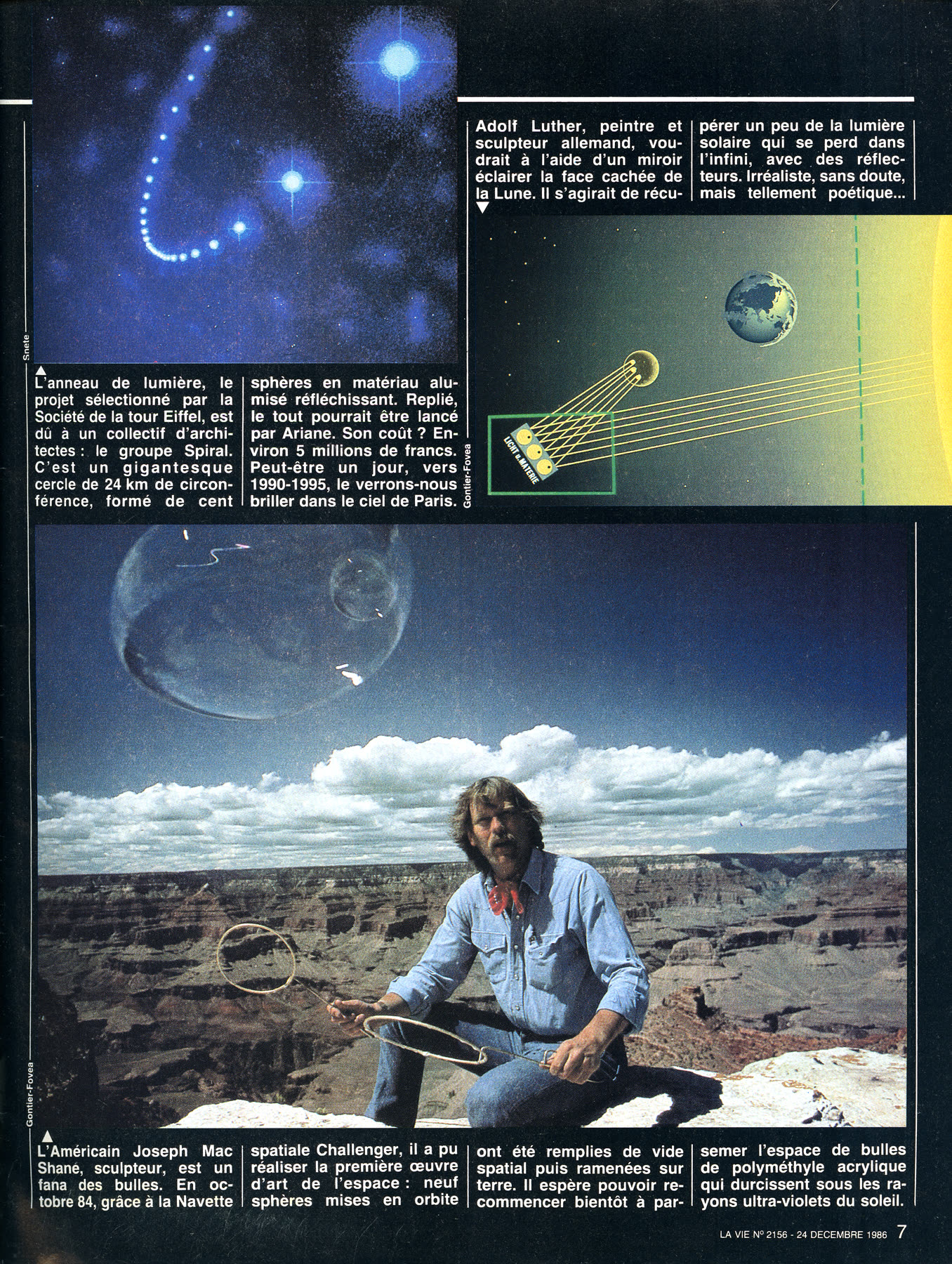
“Ciel ! Dessine-moi une étoile” — La Vie, no. 2156, 25 – 31 December 1986